The dentist who continues to treat the country’s pain through politics
 24-08-2026
 4 mins
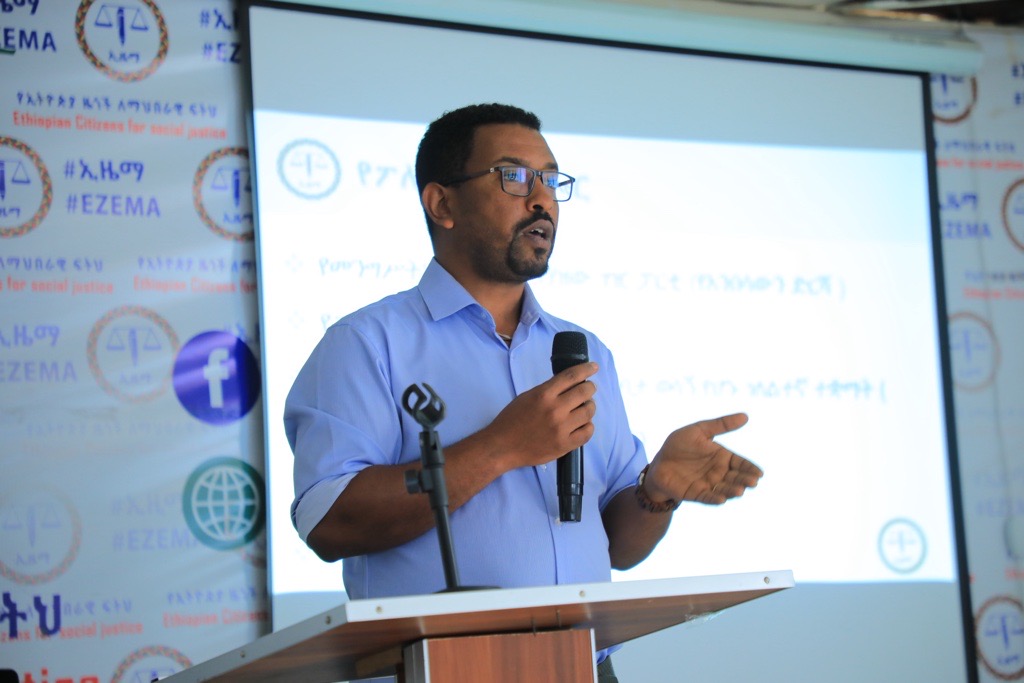
A poet, dentist, politician and a father, somedays, he is mostly one or the other. But most days he is all these. Dr. Mulualem Tegegnework, a pioneer alumni of NIMD Ethiopia’s first Democracy Academy, embraced politics with cautious optimism that his country is transitioning to democracy. Today he is chairman of the Ethiopian Citizens for Social justice (Ezema) party, a citizen-based political movement. He spoke with us via Zoom, calling in from Addis Ababa.
From dentist to politician: How did that happen? Any surprising similarities in the work?
Medicine, like politics, is generally about serving people and communities: to improve their quality of life and give them hope for a better tomorrow. As a politician, you do that through influencing or making policy, for example, on economic and political issues; by resolving violence, by building peace; caring for the community at a different scale. As a dentist, you work with one person, you try to treat one person, and you try to relieve their pain in a conducive environment. Every procedure gives you a chance to understand and relieve the pain of that person. I really feel the pain of my country in the same way I feel the pain of my patients. And if there is a chance, I can treat that pain, I will do it.
Ethnicity is central to of Ethiopian politics, what are your views on this?
Personally, I don’t belong to any ethnic group. My parents—and even my paternal and maternal grandfathers—are from different ethnic groups. So, how could I choose one ethnic group to define myself? I believe identity is complex and cannot collapse into one category. Unfortunately, in Ethiopia, ethnicity is more structural than a matter of simple personal choice. It defines your everyday interaction—in politics, at the bank, and anywhere you go. I don’t believe that is beneficial for Ethiopia. We are a diverse people. We have different cultures, different religions, different perspectives. This diversity should be accommodated. But my experience and feeling—also during my student days—is that everything is politicized ethnically. And it shouldn’t be so mixed up.
How did your student days shape your views on politics?
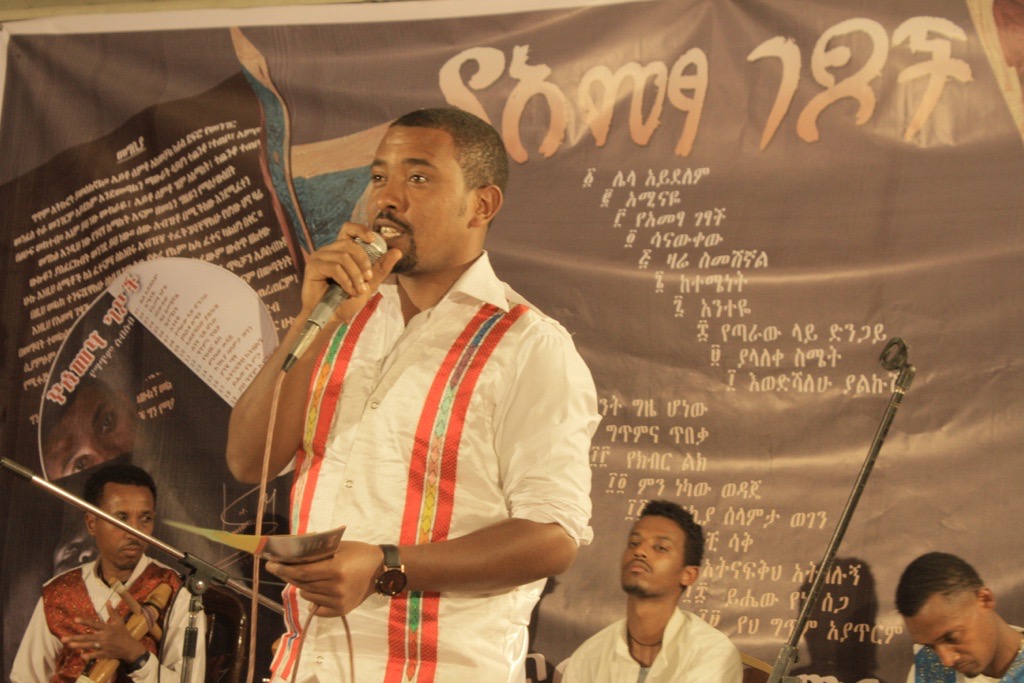
I went to Jimma University – based in the Oromia region – to study dentistry, it was only after university that I started to read into the political history of our country and became involved in politics in general. But Jimma gave me a taste: The politics was radical and related with different languages. If you don’t speak such languages, you are an outsider and you don’t feel that you are at your own country. During my university years, I was also very active in the community because I was president of Jimma university student union charity club and also a poet.
Through EDAC you met politicians with varying political views, colours and parties. How did you experience this?
I was young then, about 33—the age of most participants. What struck me is that despite our different party affiliations, we shared the same vision and collective desire to improve the country. We wanted the same things— justice, freedom, equal opportunity for everyone; a prosperous, civilized and democratic Ethiopia. EDAC really re-shaped my views about politics—our shared vision should push us to collaborate even across party lines despite differences in perspectives and approaches. After we graduated from the Academy, the alumni collectively created the Ethiopia Visionary Leaders Association. We agreed that we have the same vision and we can work collectively towards it. We believe dialogue is the first thing to do, to circumvent differences and assumptions, and in our country, there is no chance to sit down and discuss what everyone exactly wants. It is all about violence, war, and armed struggles. So, we try to offer an alternative to our association. Even though we have different theoretical and philosophical beliefs in our politics, we believe that our differences can be resolved through dialogue and sitting together around the table.
What would you say is the biggest obstacle for meaningful dialogue in Ethiopia?
Political violence, war and armed conflict as well as identity politics come to mind in terms of obstacles. Identity politics is crucial. First, are the ethnonationalists who approach politics through an ethnic lens, advocating greater power and autonomy for states, based on ethnicity. Then, we have the Pan ethiopianists, advocating for one Ethiopia where a single Ethiopian citizenship supersedes ethnic identity. Both groups distrust each other. Pan ethiopianists accuse ethnonationalists of wanting to split the country. Ethnonationalists accuse Pan ethiopianists of assimilationist politics. We need to find common ground between these two spectrums. An initiative from the government has started, the National Dialogue Commission. Here, different political parties, actors, and emerging leaders engage in a dialogue to address some of these issues. The Ethiopians Visionary Leaders Association, which reunites EDAC/EDAW alumni, conducts similar initiatives but with senior politicians and emerging leaders. In our country, history has a lot of value and there are multiple narratives. We have to critically examine these different narratives. For example, we got a chance to discuss identity politics and the constitution. The current constitution is rooted in ethno-nationalist doctrine, leaving those like me who reject identity politics grounded in ethnicity, feeling left out. So, the Constitution needs to be amended to accommodate people like me. This scares those who want ethnic identity to be the principle for organizing or structuring the state, as they worry about losing the ethnic identity. This is an example of one of the dialogues we hold.
A father, a poet and a politician: How do you combine all your roles?
It’s actually the most difficult profession, because everyone assumes that politicians are not reliable. Politicians are not those people who get respect or credit. I think being a dentist compensates for that gap, love from the patients, and respect from the clients in a time when I really feel down about my political work. And when I can’t bring my politics home, I find support from my fellow EDAC alumni through our association. EVLA has an office where I sit with friends from different political parties, and coffee to discuss political ideas, what’s happening in the country, and how politics affect our lives. We get a chance to comfort each other when something happens. When I became chairman of my party for example, most of the members from different political parties helped me on social media. We are not from the same party, but they were helping me because, as EDAC alumni, we believe we are the same family. That is a big support.
What would you say to other young people thinking about a life in the public service?
People who want to join politics should read and understand what politics looks like first, then put that into a vision. Not a vision for personal profits. Don’t get into politics for personal gain as it is the most – the most – uncomfortable place to look for personal benefits. You should come to politics to give, not to get. Politics has a cost and they should understand this. But the cost becomes very easy or becomes normal or understandable if you are principled and have a vision for change that serves the community.
Dr. Mulualem sees his last patient of the day at six. He will be at a party meeting by seven. His story was featured in the 2025 NIMD Annual Report.
Disclaimer: This interview has been edited for clarity and conciseness.