Sudan Democracy Academy: A Q&A
 26-10-2026
 3 mins
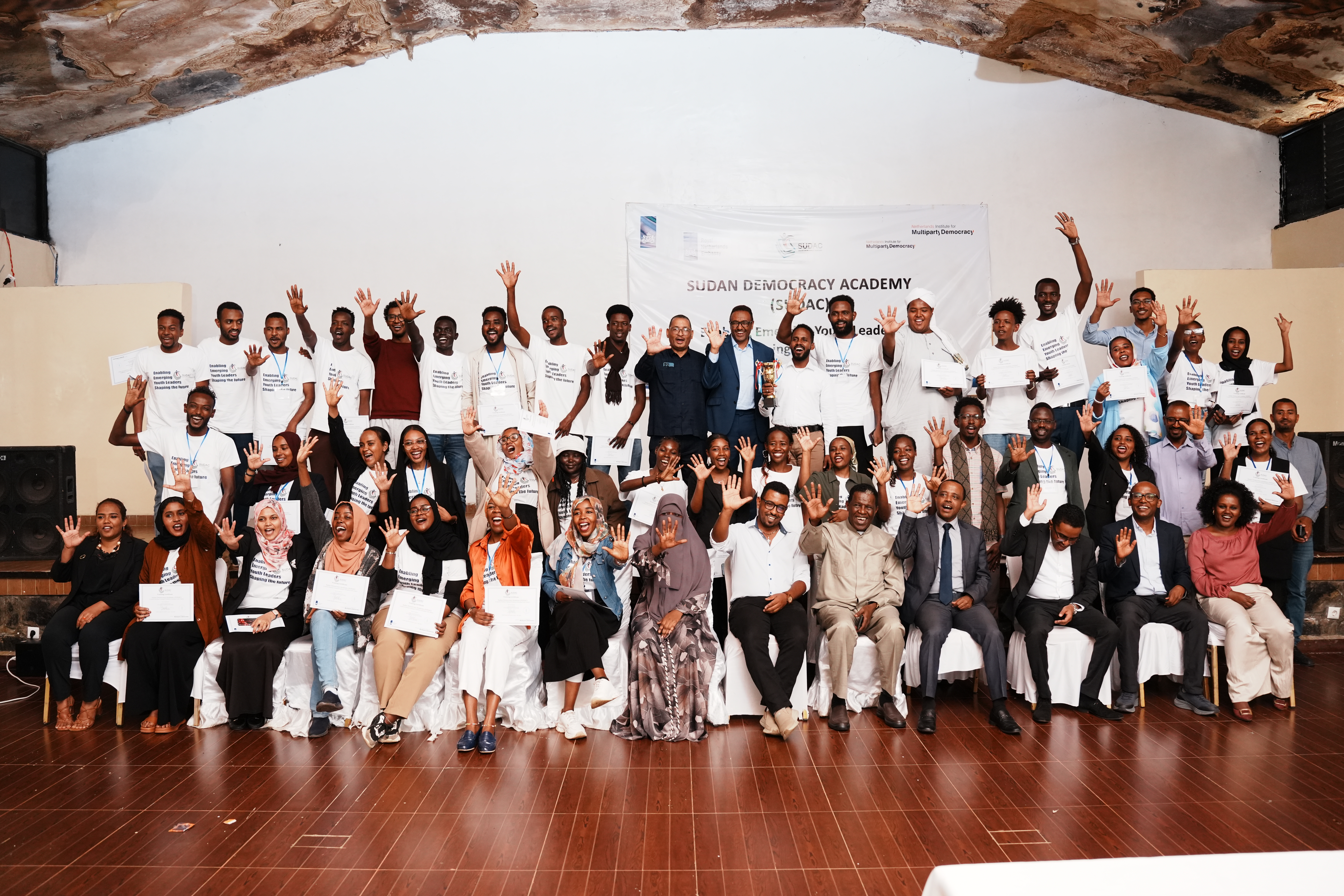
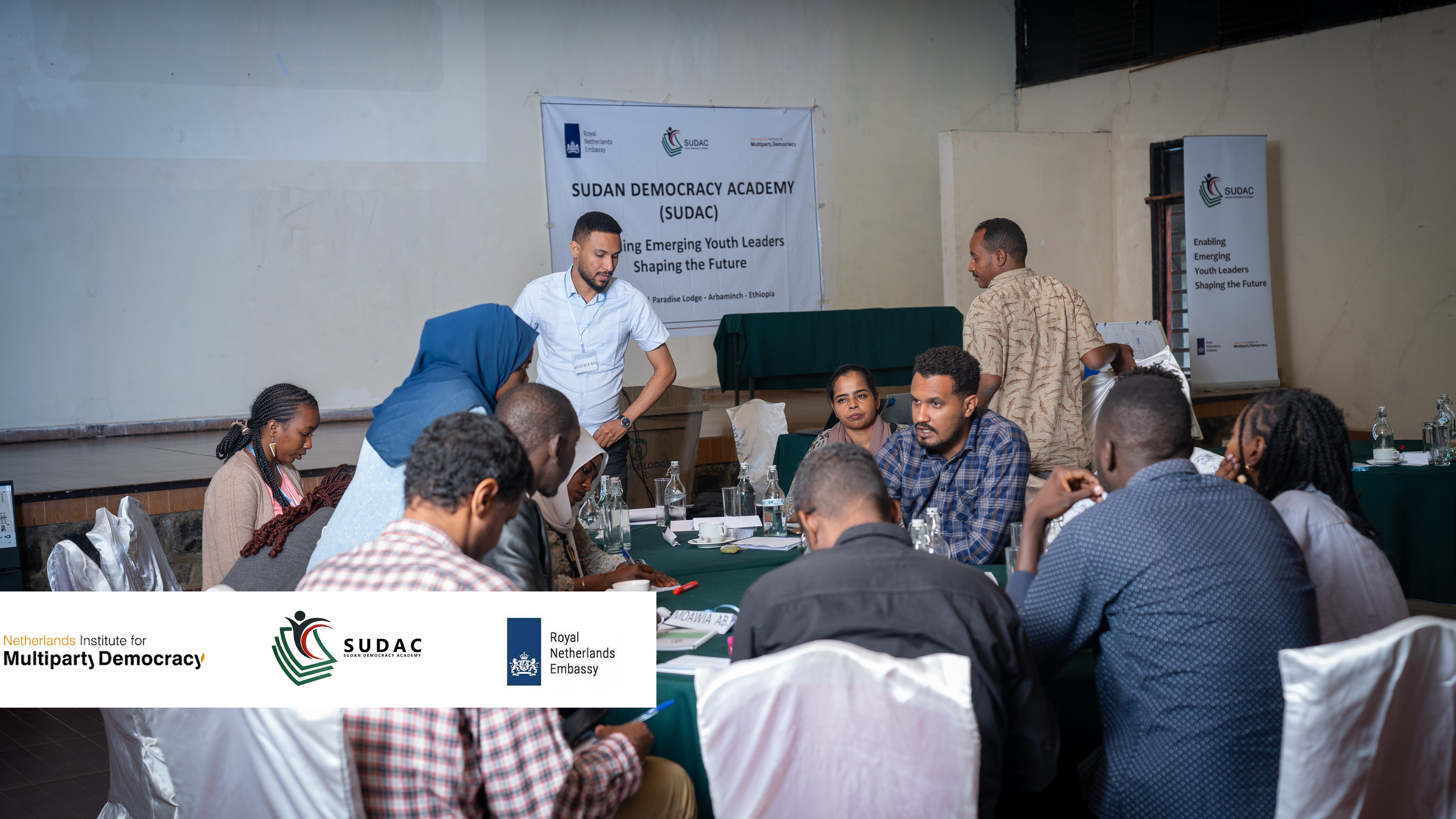
With 200 Sudanese leaders trained across bootcamps and a self-governing alumni network spanning four countries, it is time to look back at the impact of the Sudan Democracy Academy (SUDAC). Running from November 2024 to October 2026, the programme operated under extreme conditions: delivering training during an active civil war meant adapting on the go, from finding safe venues to managing unreliable power and internet during online sessions. Two years on, what does the programme leave behind?
What is SUDAC?
Built for young Sudanese who rarely get a seat at the table, SUDAC brought together members of political parties, civil society and Resistance Committees, including women activists who led the 2019 revolution but were sidelined afterwards, youth from rural areas, Sons and daughters of costumery bodies, professionals Association and marginalised communities. Sudan’s political scene is fractured and often violent, and a generation of emerging leaders have few places to build the skills and networks that democratic politics requires. SUDAC was created to fill that gap.
Delivered by NIMD Ethiopia with Al-Tareeq Center for Rural Development and the Center for Governance and Security Studies, it adapted the Ethiopian Democracy Academy model to Sudan’s own political fault lines. Across two years and multiple bootcamps, 200 Sudanese leaders were trained, with online sessions to strengthen the network as well as in-person sessions in Arba Minch, the closest NIMD could safely bring participants to home The programme was made possible with funding from the Embassy of the Kingdom of the Netherlands in Sudan.
What do participants actually learn?
“In the Academy’s halls, a miniature Sudan came together: faces from every party, community, and region, united by the desire for a better country. There I realized that when diversity is managed with awareness, it becomes a source of strength rather than division.” Abdelsadig Mohamed
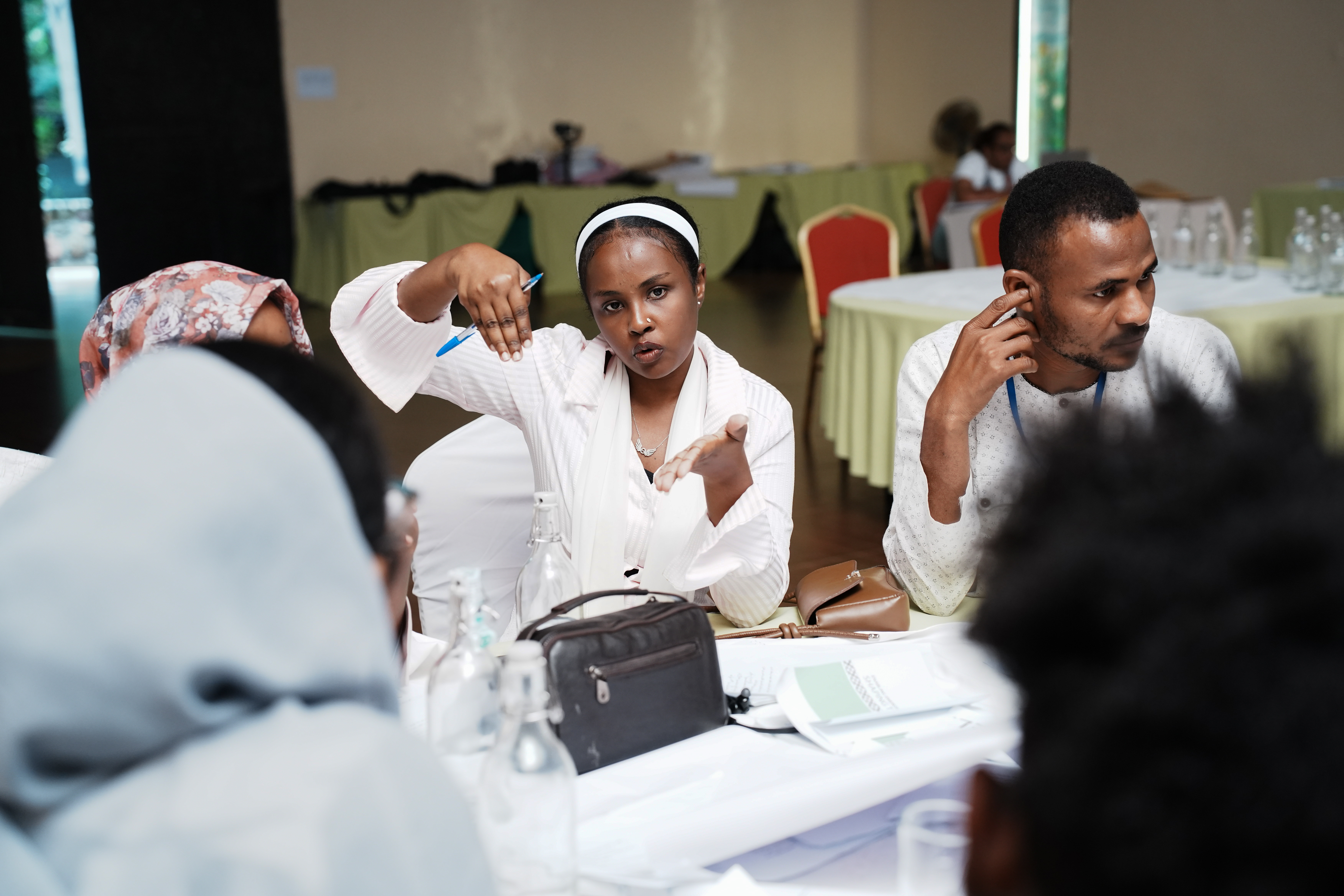
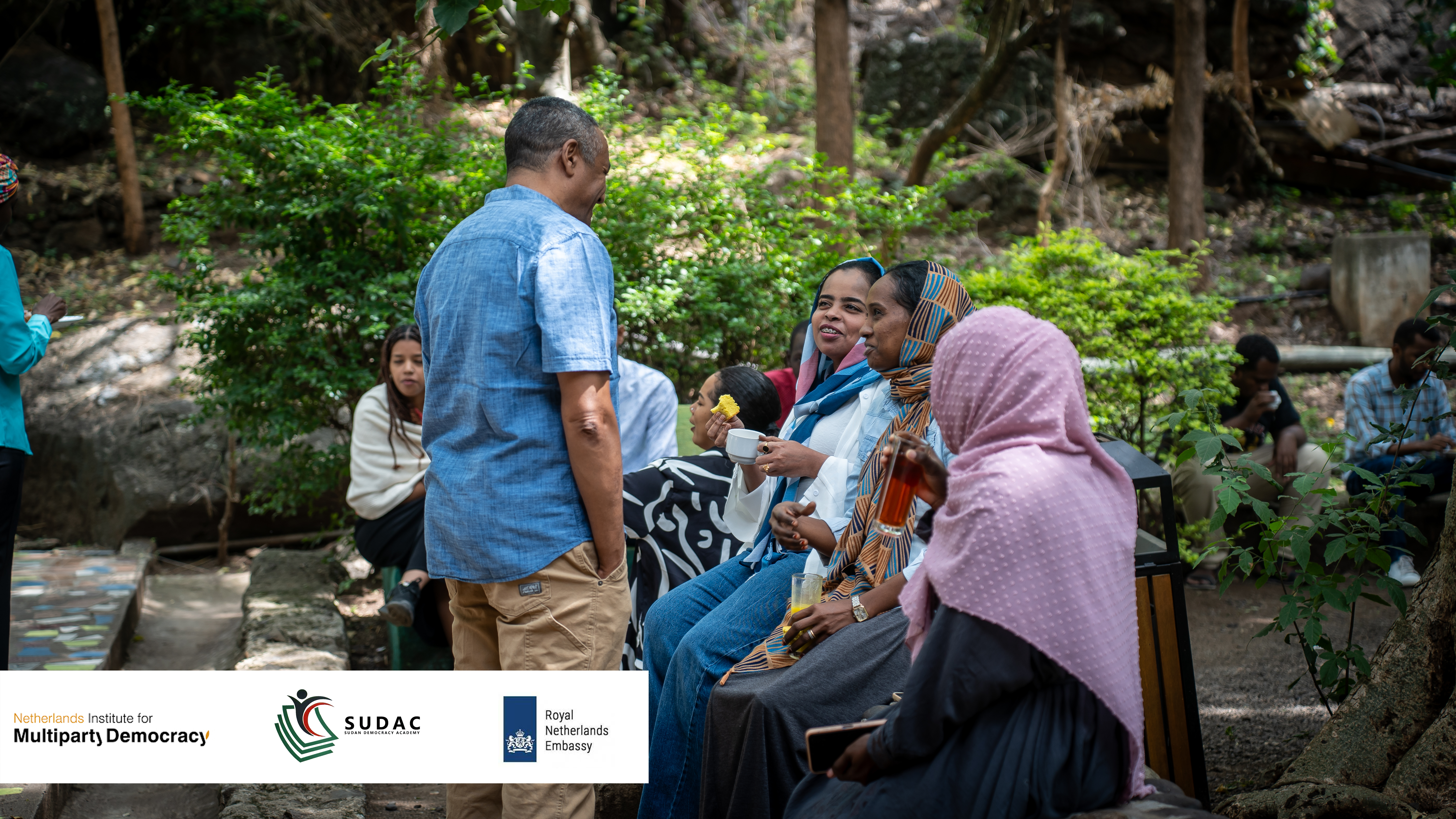
The curriculum is built around Sudan’s own political challenges rather than a generic leadership template, and it is peer-driven: participants learn as much from each other as from facilitators. This is a 360-degree method draws on NIMD’s Democracy Schools approach, in which hiking, cooking, movie nights and sport count as much as classroom sessions, because trust across political divides takes more than a lecture to build.
What did participants take from the sessions?
Two themes came up consistently in participant feedback. The first was the discussion format: participants said it pushed them to think critically rather than simply absorb information. The second was for each other. Across the two weeks, new working relationships formed between people from political backgrounds that rarely interact, and participants described a sense of solidarity they had not expected. If SUDAC has a product beyond the curriculum, it may be this: young leaders across Sudan and the diaspora who now know each other personally, not just by political affiliation.
What happens after the bootcamp?
“I met young people from every corner of Sudan and every background. Our differences didn’t divide us. Instead, the Sudan Democracy Academy brought us together as a Sudan in miniature. They connected us to networks that reach across cohorts, and although the training ended more than seven months ago, the support continues: workshops, empowerment, and a women’s network they haven’t forgotten. As a woman from eastern Sudan, from a closed community, this experience has been a real and lasting addition to my life.” Eithar Mohamed
Graduates join the SUDAC Alumni Network, so the connections don’t end after two weeks. Since September 2025 it has grown to include elected coordination committees for each cohort, national chapters in Kenya, Uganda, Sudan and Ethiopia, a women’s alumni network and a regular series of online dialogues. In September 2026, a final set of four online sessions, three on youth political empowerment and one on writing a policy paper, rounded out the programme.
Together, they keep learning across borders, with sessions shaped by an alumni-needs survey covering Sudan’s geopolitics and current situation, the dilemma of identity in Sudan, neopatrimonialism and the post-colonial state, and human rights in foreign policy. Alumni also reviewed the Code of Conduct for later boot camps, and in early 2026, 100 women alumni met to set up the women’s alumni network.
Two years on, what remains?
As the NIMD Ethiopia team looks back on the past two years, what stands out is that young people from opposing sides of Sudan’s conflict kept showing up to learn, argue, cook and hike together. The network, shared language and trust they built will outlast the final report.