From Campaign Trail to Council Chamber: Empowering Liberia’s Female Leaders
 15-10-2026
 3 mins
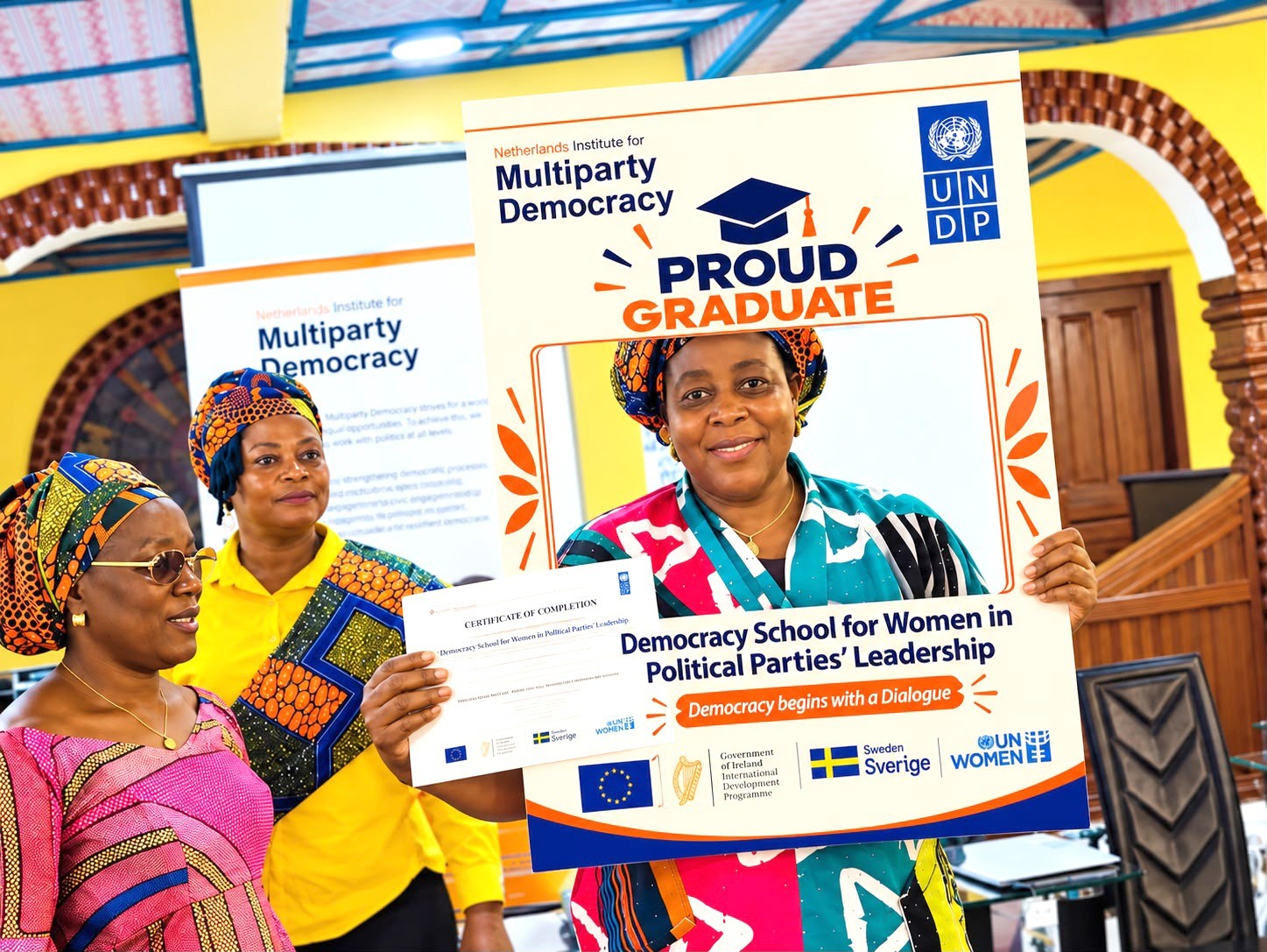
In a quiet conference room in Buchanan City, twenty-six women sat around the same table, transforming what could have been a scene of partisan rivalry into a unified front for democratic reform. Representing thirteen distinct political parties across Liberia, these leaders gathered for the second phase of the NIMD Liberia Democracy School for Women in Political Parties and Leadership, held 21 to 25 September, 2026.
Behind every campaign, outside every council
For generations, women have been the backbone of Liberian political parties. They organise grassroots rallies, mobilise voters and keep campaigns going through every election. But once the votes are counted and the doors close on council chambers, budget talks and policy design, those same women are too often left outside. One participant put into words what many women across the country feel when she said she wanted to finally understand her rights as a woman in politics.
For some participants, independence starts even before politics. A participant engaged in agriculture in Margibi emphasised that whether or not a woman eventually becomes a representative or holds another political position, she will still need food and economic security. As she put it:
“When women cannot provide basic necessities for themselves and their families, politicians can potentially influence them through small material incentives such as bags of rice. By becoming productive and food-secure, women could reduce their vulnerability to such forms of political inducement.”
In her view, using the land to produce food provides an important foundation for women’s independence, and economic independence goes hand in hand with political independence.
Learning how local power works
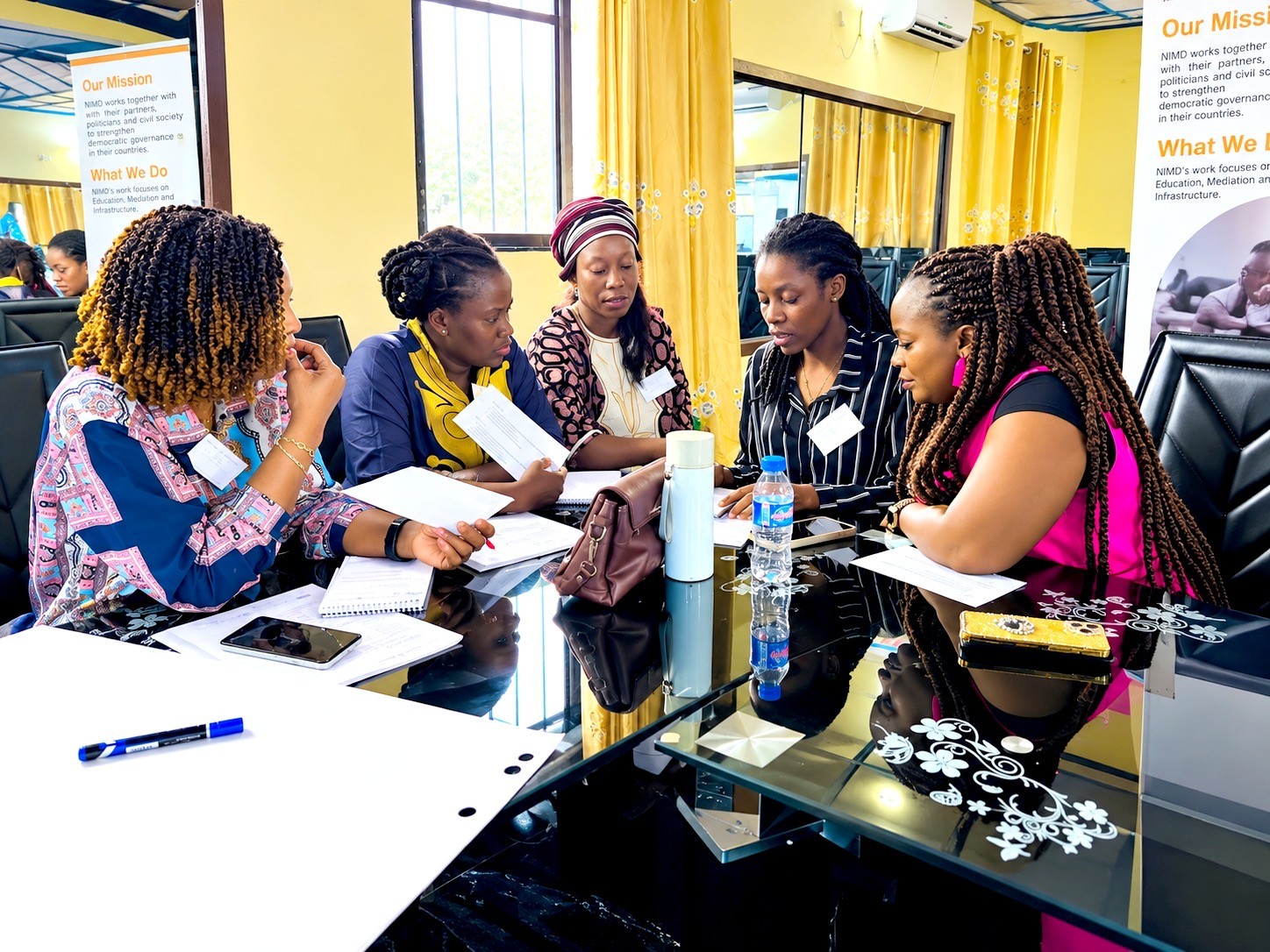
Eddie D. Jarwolo, Executive Director of Naymote Partners for Democratic Development, led a session on how local government works and where women can raise gender issues. His message was that decentralisation should bring women closer to power, resources and decision-making, not just bring government closer to the people.
Using simplified versions of their respective County Development Agendas, participants looked at how County Administrations and County Councils actually work. They practised:
- reading local budgets;
- tracking development projects;
- engaging public officials;
- and holding those public officials to their commitments.
The training also encouraged them to see political participation as something that happens all year, not just at election time, and to draw on their knowledge of community needs and their experience in peacebuilding to shape local decisions. A session on digital profiling and messaging helped participants use social media to build their profiles, set out issue-based platforms and speak directly to voters.
The multi-party format created space for cross-party solidarity, which NIMD Liberia Director pointed out as an advantage to produce representation from different political groupings in conformity with the electoral system. Participants were urged to build lasting alliances across party lines to advocate for systemic reforms that expand female leadership from the grassroots level upward. The spirit of mutual support was captured by Counsellor Moriah Yeakula, who challenged every leader in attendance to:
“Remember that breaking through the political glass ceiling carries a collective responsibility. If you find yourself as the only woman in the room, your duty is to open the door wider for others rather than acting as a blocker.”
By combining actionable political skills with cross-party collaboration, the NIMD Democracy School helped these twenty-six women leaders to leave Grand Bassa County better prepared to engage County Councils, follow public budgets, and push for more inclusive local decision-making. Where together they bring Liberia, step by step, toward a more inclusive and accountable democratic future.
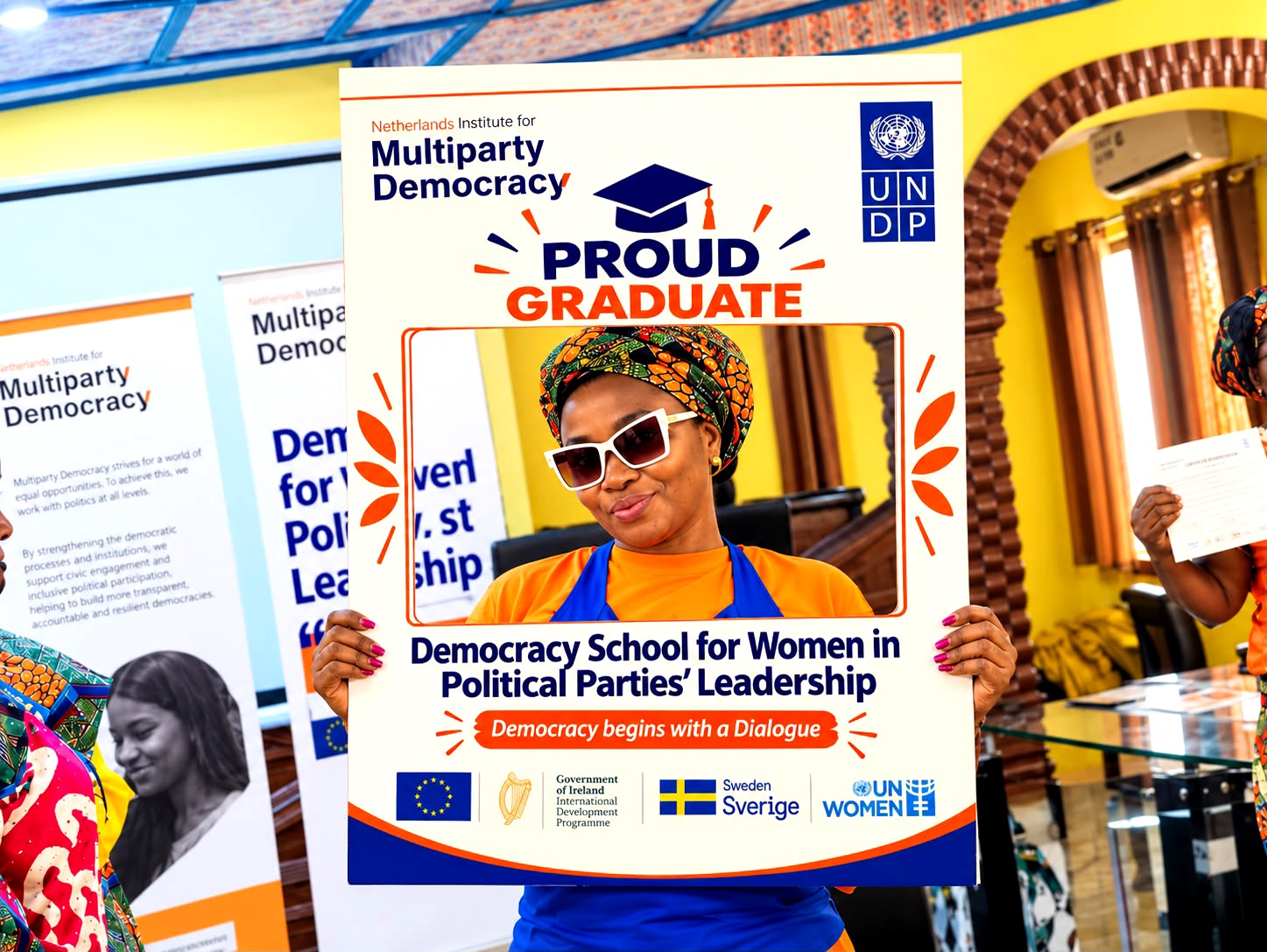
More about the programme
In a world where currently less than eight percent of the global population lives in a full democracy, initiatives like NIMD’s Democracy School are necessary to invest directly in the human foundation of democratic governance as every democracy needs democrats, and every democrat needs the space to thrive.
The weeklong intensive programme was designed around the fundamental truth that democracy cannot thrive when half of its population remains on the sidelines. The programme is supported through the Liberia Electoral Support Project, funded by the European Union and the Embassies of Ireland and Sweden, managed by UNDP, and implemented jointly by NIMD and UN Women.