NIMD Colombia: Closing the gap between what was promised and what has been built
 29-07-2026
 4 mins
NIMD has been working in Colombia since 2010 and played a key role in supporting the promotion of peace since a landmark 2016 agreement that ended the protracted conflict of 50 years between the Government and the FARC-EP guerilla group. The agreement resulted in a disarmament process, the official formation of a political party of FARC – now known at the Comunes party. NIMD had however, been identified as an accompanying organisation to the peace process, specifically in the international verification of point 2 of the final peace agreement.
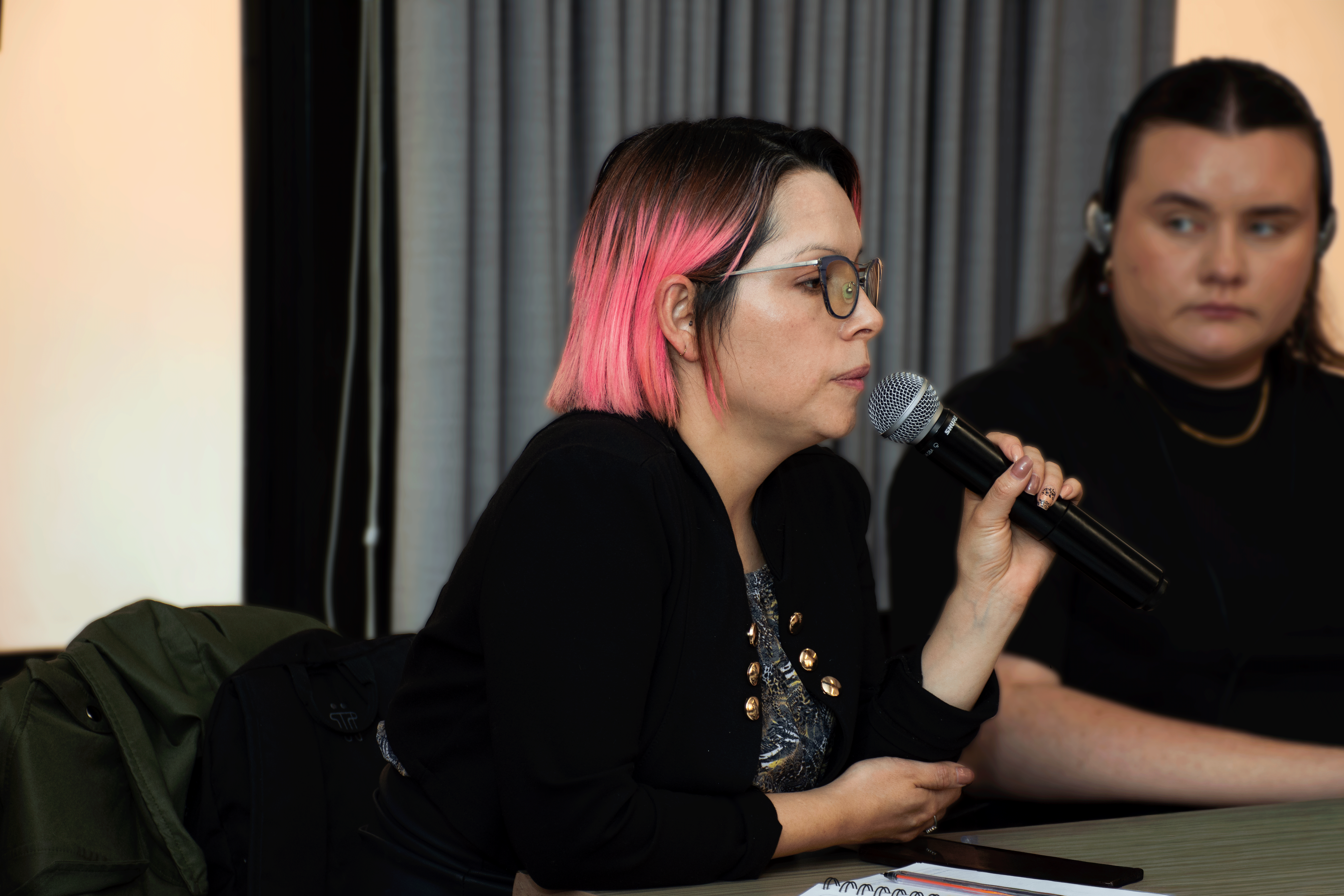
For Carolina Sarmiento, the 2016 Colombia Peace Agreement was not an endpoint but a beginning. A signatory to that agreement, former political prisoner, former combatant, and member of the Comunes party, she has spent the years since navigating the gap between what was promised and what has actually been built. NIMD Colombia accompanied her through much of that journey through the multiparty roundtable established within the LEAP4Peace programme. We sat down with her to reflect on her political journey and what participation has looked like in practice.
Throughout your journey, what stands out as the most significant milestones in your political activity?
I served as Gender Advisor and was part of the Bogotá Women’s Advisory Council for nearly five years. The latter is a citizen participation body in which we have a space as women signatories of the peace agreement, there I was monitoring the implementation of public policy for women and diverse groups, working alongside the social organizations. I studied international relations and will be graduating soon. And in the last regional elections, I ran for local council in the Kennedy district as part of a coalition list.
Your political participation has always been closely linked to a woman’s perspective. Where does that commitment come from?
We, and I say “we” because it was never just me, always carry the woman’s perspective at the forefront. It is cross-cutting within the peace agreement, and we consider it a historical debt to women in Colombia. As a revolutionary woman, defending women’s rights was already my practice. But now I feel there is greater clarity. Because there won’t be a country at peace, there won’t be a truly free country, if women don’t have a genuine exercise of gender equity alongside men.
What have been the main obstacles to women’s participation in politics?
Just by being a woman signatory, a combatant, there were already difficulties. Stigmatisation by the media, by government agencies. And the very act of participating: not being able to enter spaces that are often deeply hostile. Over time I came to understand that the struggle to get into those spaces is itself a form of political violence. It is not something women should have to fight for. Within our own party, we have had necessary internal discussions to ensure women’s voices remain strong. Today there are more women than men in the national and district leadership, which is already a major achievement. But there are still barriers to financial resources, access to training, and significant security barriers. Traditional parties have resources and structures that we simply do not have. Women do not arrive with the same level of preparation because we lack the necessary financial resources. In addition, women from working-class parties do not have the same economic, employment, or professional conditions as women leaders in traditional parties.
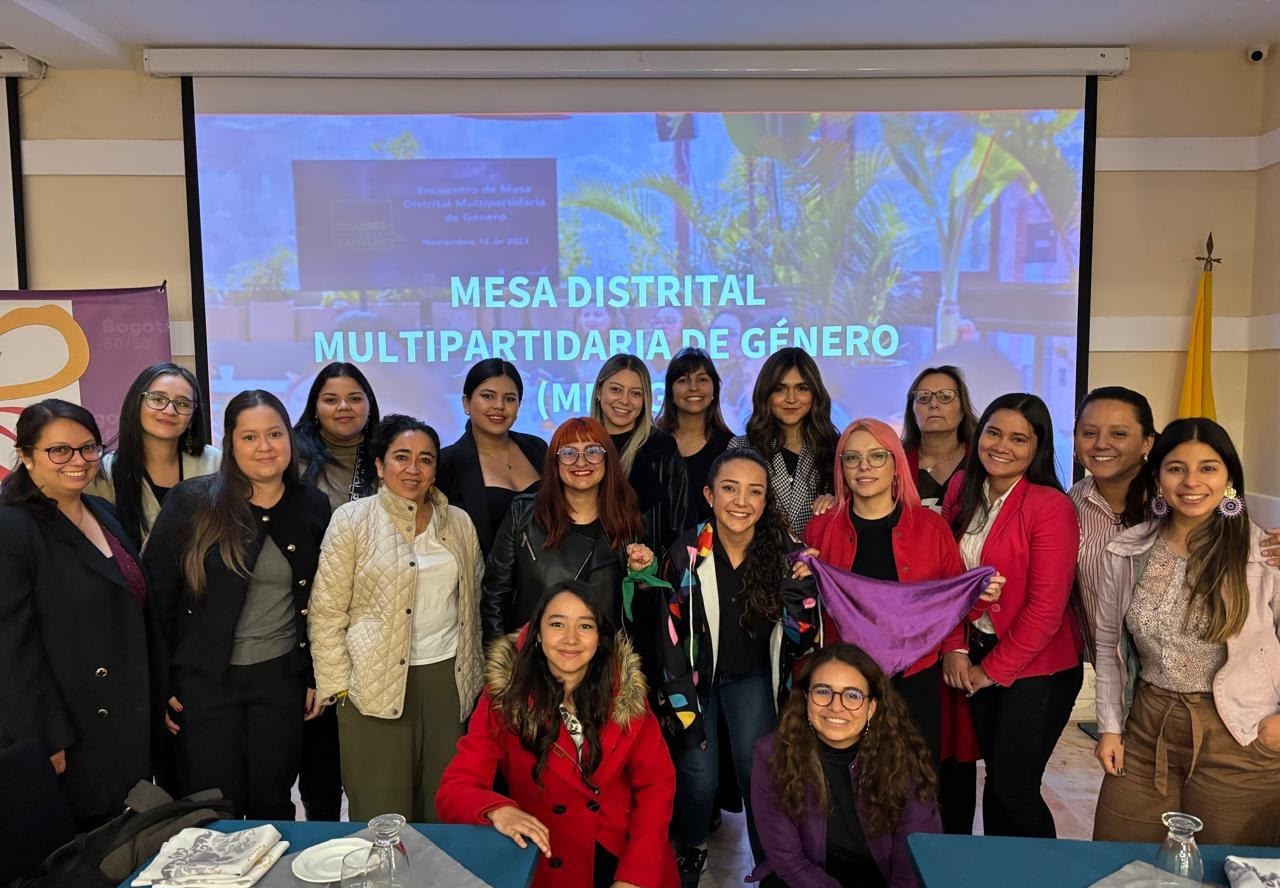
The multiparty roundtable brought together women from across the political spectrum. What did dialogue across those divides actually look like in practice?
At first, we were a little wary. All the parties would be there, and in other contexts these are our opponents. But we said: we don’t have to agree; it’s mainly about what unites us, what brings us together. And in practice, that turned out to be more than we expected.
We held meetings on political violence, bringing women leaders from Congress and local government together with social organisations and ordinary women so they could learn more about women’s leadership in different spheres. We organised a political party fair so people could get to know the different parties and their activities. We also had meetings with the Ministry of the Interior and the multiparty committee, sharing our stories and what each of our parties had experienced, including how candidates were selected internally. We realised that in some traditional parties, it simply came down to whoever the party president chose. In our party, we hold an internal consultation process that involves the entire membership, from the regions to the national level. The contrast was eye-opening.
One very important issue that emerged was the need to strengthen internal protocols and to develop shared ones for situations like cross-party attacks on women leaders. When our councillor Luceris from Ciudad Bolívar faced attacks from opposition parties, the multiparty roundtable supported us. We had met at a forum on political violence, built a relationship, and that solidarity became real. What we realised, even with women from parties we are ideologically opposed to, is that there is more to build as women than to divide along party lines. Ideologically, we have major differences, but here we are in this struggle together. The roundtable was also a space to surface what was happening beyond Bogotá. Colleagues had to withdraw from the last regional elections because they were threatened by armed groups. We raised this, and the economic barriers too: the fact that women don’t arrive less prepared because they can’t, but because the investment hasn’t been made. It’s important that the reality of the regions be known so that we can support and help ensure that people there can participate in the best way possible.
How do you see the current situation for women in politics and peace in Colombia?
It’s difficult. The Comunes party lost its legal status in the last parliamentary elections in March 2026, and that has not been easy. Over 400 signatories have been murdered. Colleagues have faced threats and displacement. This year, many signatories also learned they would no longer receive their monthly allowance, including women who are mothers, whose partners have been killed, who had already had to step back from political spaces just to keep life going.
And yet the current governing political party — Pacto Histórico –has the highest representation of women in Congress. In the recent 2026–2030 congressional elections, the Pacto Histórico accounts for 43.3% of the elected female senators. Women’s participation in politics has improved, and its surrounding organisations have grown stronger.
While the number of women on electoral lists is high, the number who actually get elected remains very small. We are always there, strengthening campaigns and coalitions, but it isn’t reflected in the seats. This discrepancy needs to be taken seriously.
What are your expectations for women’s political participation in the future?
Full implementation of the peace agreement, including its gender chapter. We are at around 10 or 20% of what that should look like, but it remains a real tool for measuring progress and moving forward. A Congress genuinely strengthened by women who truly represent us, not just women who get in, but women who lead and shape public policy alongside women’s organisations. Not quotas as a ceiling, but 50% as a floor.
And in the regions: let the women already emerging from those territories be the ones to step forward. I have every hope that we will continue advancing in this democratic transition, and that it will bring substantial progress in everything that pertains to our rights.
Carolina’s story was featured in the 2025 NIMD Annual Report.
Disclaimer: This interview was conducted in Spanish and has been translated and edited for clarity and conciseness.