A roadmap for youth, by youth, in East African politics
 29-07-2026
 4 mins
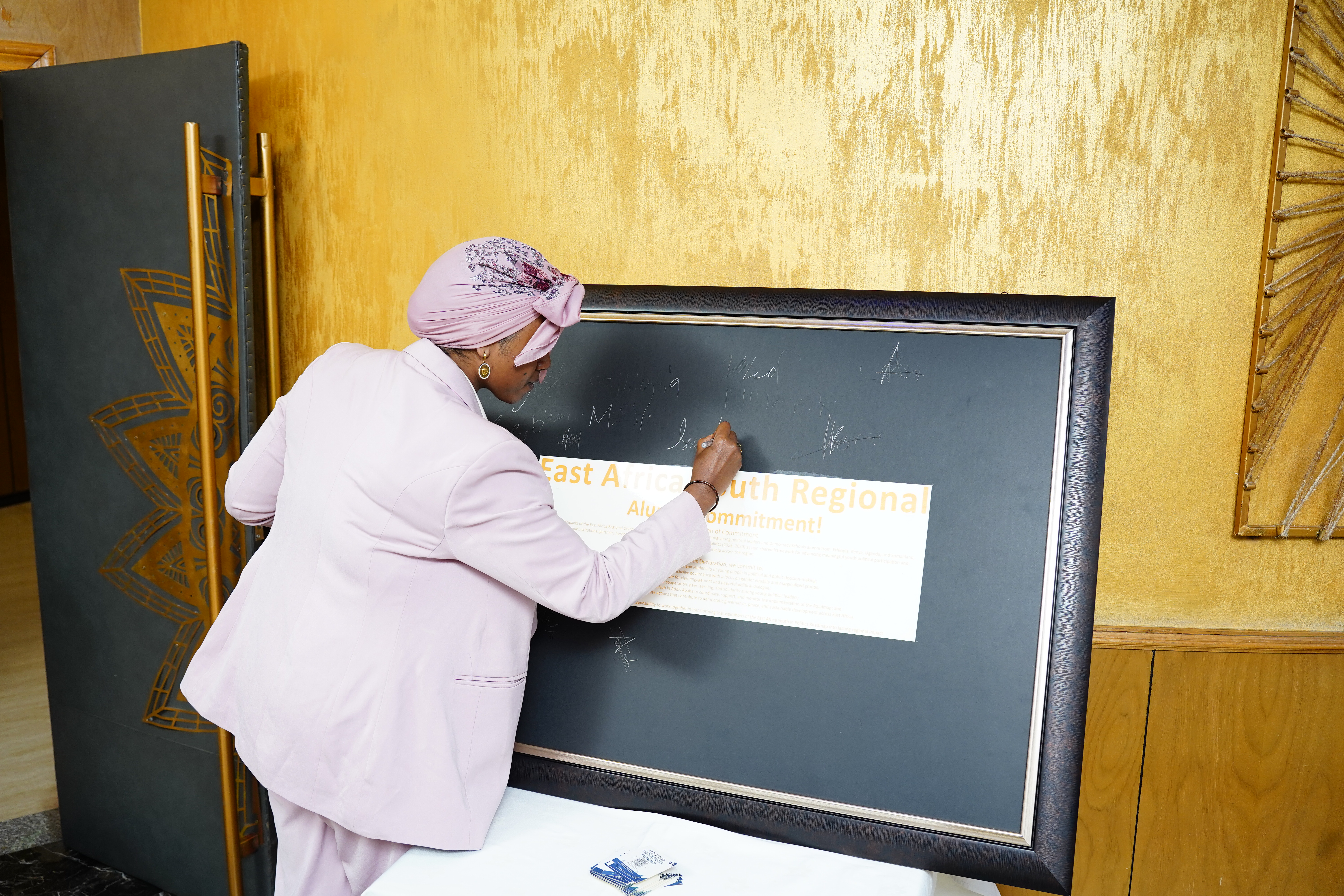
We talk about youth participation. We talk about regional cooperation. We talk about young people owning their own agenda. Last week in Addis Ababa, young leaders from Ethiopia, Kenya, Somaliland and Uganda combined all three and signed their names to it.
On 24 July 2026, they collectively launched the East Africa Youth in Politics Roadmap (2026–2030), a shared regional vision and practical action plan to advance meaningful youth political participation.
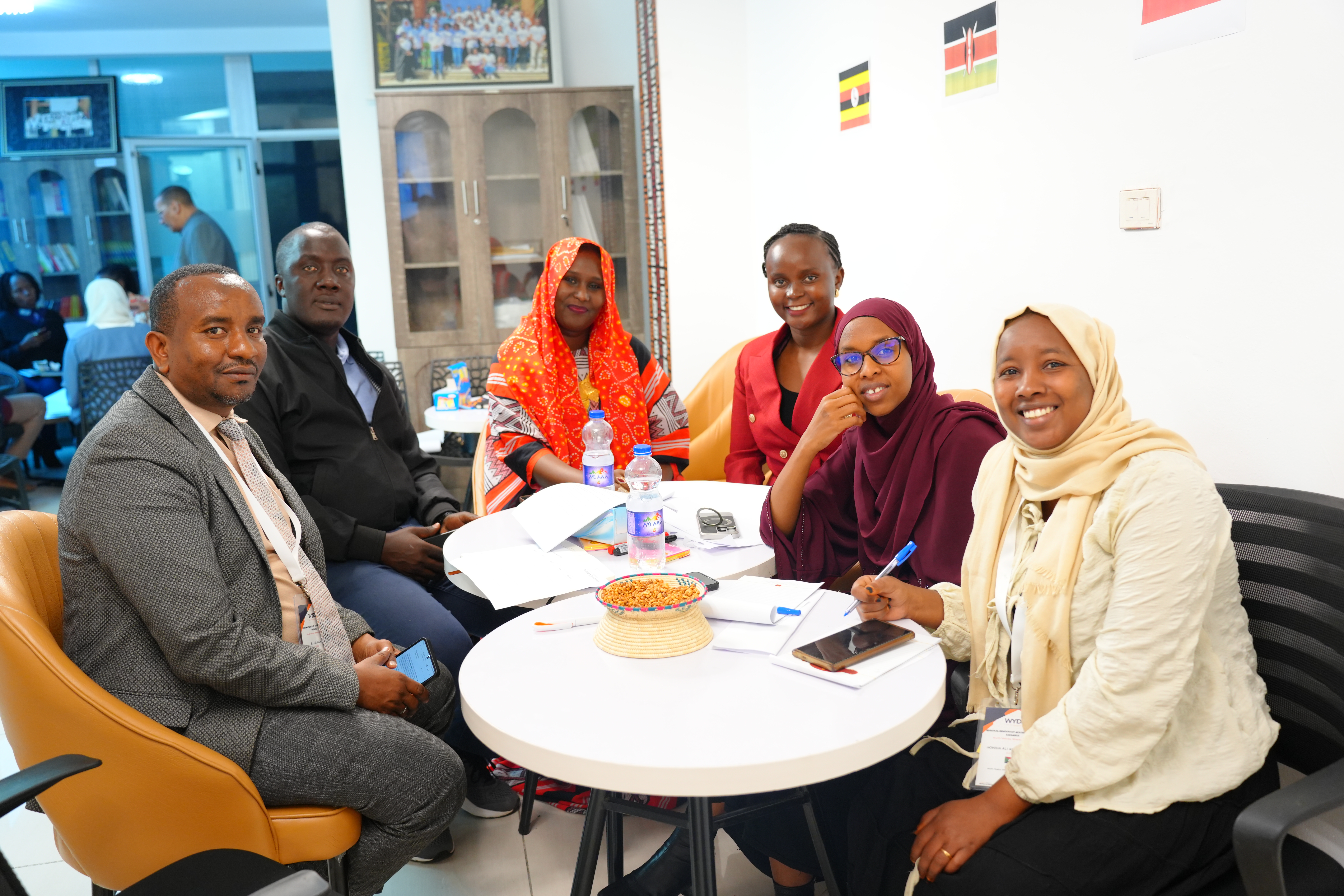
The launch was the centrepiece of the Regional Democracy Schools Alumni Exchange, which opened a day earlier. Alumni of the NIMD Democracy Schools in Ethiopia, Kenya, Somaliland, Sudan and Uganda spent several days working through what the Roadmap will take, comparing what stands in the way of young candidates in each of their countries and agreeing who does what over the next five years.
“The Regional Exchange taught me that democracy is not only about institutions, but about people’s participation, trust, and inclusion. From Somaliland’s experience and across East Africa, I learned that every community has valuable lessons to share in building peaceful and representative societies.” Nasra Ali Mohamed, Youth Ambassador Somaliland
Built by youth, for youth
It started at the Malindi Conference in Kenya in August 2025, where alumni of the NIMD Democracy Schools met to compare notes across borders. What they found was that the obstacles looked much the same in each country. They left Malindi with the basis of a shared Roadmap and a regional network of their own.
Four Youth Ambassadors carried the writing from there, one from each of the countries the Roadmap covers. Sultan Kassim Genna from Ethiopia, Ankunda Trassyleen from Uganda, Peter Edwin Muriu from Kenya and Nasra Ali Mohamed from Somaliland worked as a team, taking what came out of Malindi and turning it into a five-year plan.
“Democracy in East Africa will only thrive when its youth are the authors of policy, rather than just its subjects. This Roadmap is our collective commitment to turn our demographic potential into genuine political power.” Sultan Kassim, Youth Ambassador Ethiopia
It sets seven goals for the region by 2030:
- Give young people the civic knowledge and leadership skills to run and to govern
- Change the laws and party rules that keep them out
- Bring down the cost of standing for office
- Make politics safe, particularly for young women
- Open up decision-making, and get generations talking to each other
- Use digital tools to widen participation and hold leaders to account
- Build youth networks that work across borders, not just within them
Under each goal sits a set of specific actions. Campaign finance limits and simpler nomination requirements. Enforcement of the youth quotas that already exist on paper in Kenya and Uganda but rarely change who gets elected. Legal protection against political violence and harassment, online as well as offline. Funding mechanisms that lower the cost of entry for young candidates. Every goal has a named lead body and a five-year target attached to it.
Somewhere to keep going
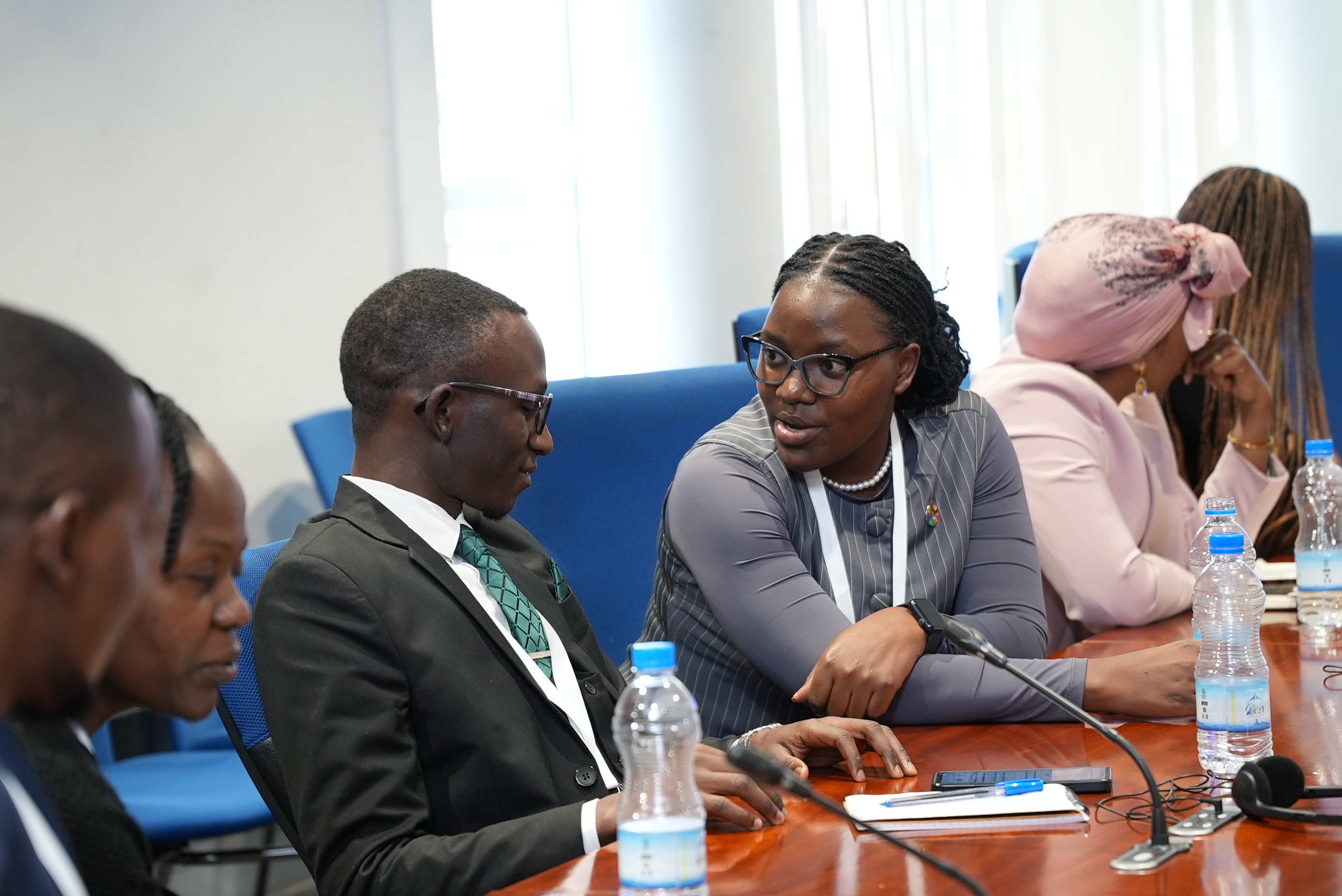
Alongside the Roadmap came the East Africa Regional Hub for Democracy Schools Alumni, based in Addis Ababa. It gives young people across the region somewhere to meet, learn from each other and plan together. It answers a problem regional networks run into constantly, which is that momentum built at an event tends to dissolve once everyone heads home.
“We, young people in East Africa, have common problems, which merits common solutions.“ Peter Edwin Muriu, Youth Ambassador Kenya.
Delivery rests on a Regional Steering Committee, a National Working Group in each country and a shared communications unit. In the first year they have to elect their own leadership, agree how they work together and complete a legal and political mapping in each country.
Some of that is happening already. Participants took their questions to the African Union in person. And alumni from Kenya and Uganda spent time with the Ethiopian Visionary Leaders Association, a network of NIMD Ethiopia’s Democracy Academy alumni that has been at this nationally for years, to find out how they keep a network alive between meetings.
What comes next
The Roadmap is a milestone, as well as just the beginning. Plenty of youth frameworks have come before this one, and usually stall when they reach the implementation stage. The difference here is that the people who wrote it are the people who have to deliver it, and it is theirs to carry forward.
But young people cannot deliver it alone. They do not live in a vacuum, and implementation will require sustained commitment from political actors and other stakeholders to create the conditions for the Roadmap to succeed.
The Roadmap is a regional framework, but the real work happens nationally. Since Malindi, none of the four countries has sat still. Each has turned it into an action plan set against its own politics, laws and election calendar.
In Ethiopia, the plan was validated in November 2025 at a workshop that put youth leaders in the same room as party officials and senior politicians. The Ethiopian Visionary Leaders Association now leads implementation.
Uganda’s National Working Group, twelve young people from different regions and political parties, spent the year on the cost of running for office. A viable campaign there can run to UGX 400 to 500 million. They want nomination fees cut and a Youth Political Fund set up so small local campaigns become possible. More on how they worked.
“Just as multiparty democracy thrives on inclusion, peace in the EAC and across Africa thrives on youth and women in meaningful and sustainable politics and civic engagement. The Regional Roadmap on Youth in Politics turns dialogue into institutions and pairs potential into economic power and funding.” – Ankunda Trassyleen, Youth Ambassador Uganda
For Somaliland, the Country Action Plan was developed by NIMD Democracy School alumni, validated on 18 July 2026. It is due to launch in September.
Kenya is one of the youngest countries in the world, with around 80 percent of its people under 35. Yet young Kenyans hold fewer than one in ten elective positions nationally. They make up most of the country and almost none of its decision-makers. The country plan launched yesterday, on 29 July, plans to tackle this and it was written by the people it affects. Head to NIMD Kenya‘s socials for more.
Making the work possible
“The WYDE programme provided an inspiring platform to connect with young leaders from across East Africa, exchange ideas, and learn from diverse experiences. It motivated me to continue advocating for meaningful youth participation in peacebuilding. Peace for Sudan. Peace for Africa.” — Assyla Hussein, SUDAC Academy, Sudan
This work is carried by NIMD Ethiopia (also working in Sudan), NIMD Kenya, NIMD Uganda and NIMD Somalia, which works in both Somalia and Somaliland. Their Democracy Schools brought this generation of alumni together in the first place. It is part of the WYDE Civic Engagement programme, powered by the European Union and the European Partnership for Democracy. NIMD implements WYDE together with the Westminster Foundation for Democracy and Demo Finland.