


Mali
Country
- NIMD in Mali: At a glance
- What we do
- How we do it
- Meet the team
Main Objective
Fostering trust in politics and harnessing the voices of diverse groups across Mali, to pave the way for a more inclusive, peaceful and democratic society.
Results
Since Mali’s democratic transition began, NIMD has gathered input from over 20,000 citizens across the country through online and face-to-face forums. Participants have shared their views on the transition, the role of political parties, and how the electoral process should lay the foundation for lasting stability. We are committed to sharing these perspectives with national decision makers to ensure that people’s voices are taken into account in the political, electoral and institutional reforms on the transition agenda. Read more.
In 2021, NIMD helped to establish a cross-party advisory board of political, civil and academic leaders called the Comité de Plaidoyer et de Suivi des Réformes Électorales (CPSRE). Following the coups d’etat, the CPSRE has facilitated dialogue on Mali’s divisive constitutional reform, and ensured inclusive provisions in electoral law reforms, including the creation of an independent electoral management body in Mali. By uniting diverse groups to build consensus and address disputes, the initiative promotes trust, inclusivity and democratic values. Read more.
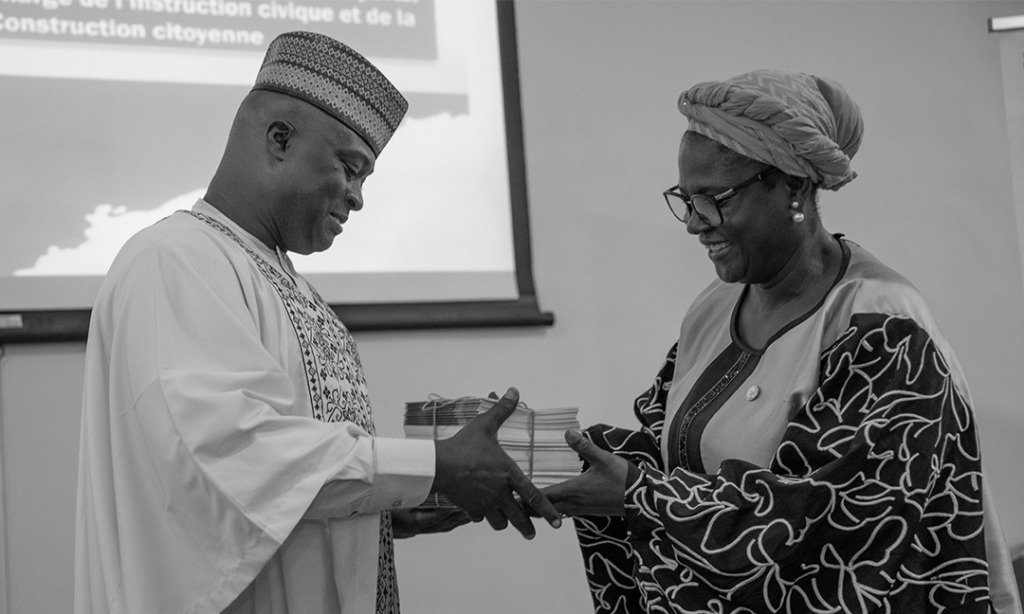
Young people make up nearly 80% of Mali’s population, and many are eager to contribute to their country’s democratic transition. That’s why NIMD‘s partners supported the Ministry of youth and sports in organizing a large exchange between 40,000 young people across 600 communes, 19 regions and through 31 diplomatic representations in the diaspora. After diagnosing, and reflecting on the concerns of young Malians, the participants presented their list of 256 recommendations to the highest authorities of the country, including the President of the Transition. Read more.
Mali: political background
Since NIMD opened our office in Mali in 2018, the country has faced conflict, intense political unrest and two coups d’état. Currently, Mali is under military rule, with plans for a transition to democracy and elections scheduled for 2025. The political environment remains tense, with questions surrounding the military’s commitment to returning power to civilians and ongoing insecurity. At the same time – with poverty and limited access to basic services affecting large parts of the population – trust between the political class and the population has eroded.
In this context, the transition to democracy is a delicate and complex process, shaped by competing interests and differing expectations. Building trust and finding common ground among political actors – and between the state and its citizens – is crucial to giving this process a chance of success. Such efforts have the potential to create a foundation for stability and offer people hope that they can actively shape a better future in their own country.
What we do
NIMD has been active in Mali since 2002, collaborating with public and political actors as well as civil society organizations. In 2018, we opened a dedicated office in Bamako.
Our early work in Mali centred on fostering dialogue among different political parties. Over time, we have continuously adapted our approach to respond to the evolving context.
As Mali moves from a 2021 coup towards elections, we believe the key to lasting peace and stability will lie in inclusive politics where people feel represented. That’s why our work today focuses on building trust and amplifying the voices of diverse groups across the country, ensuring that everyone has a say in shaping Mali’s future.
Through dialogue, we collect different perspectives and opinions so that they can feed into the transition process and future democracy. At the same time, our dialogue builds crucial bonds of trust between the population and their political representatives.
In a country with a young population, we also believe that supporting a new generation to pursue and achieve their political aspirations is crucial to building a solid democratic future. Our Democracy School provides a safe space for young emerging politicians and civil society representatives to develop the knowledge and essential skills they need to make their voices heard in politics.
Lastly, we recognize the value of regional collaboration, and build on the insights and connections from our programmes in Niger and Burkina Faso. We also bring political and civic leaders together across geographical divides, creating opportunities for them to identify shared challenges, exchange practical solutions, and build a sense of collective purpose. This regional collaboration fosters solidarity and coordinated approaches to address the complex realities and shared struggles of the Sahel region.
We build trust and amplify the voices of diverse groups, so that everyone has a say in shaping Mali’s future.
What we do: In numbers
How we do it
Dialogue
NIMD has a history of supporting dialogue between different political actors in Mali. In 2008, we helped set up one of the first independent political party dialogue platforms in the country, the Centre Malien pour le Dialogue Interpartis et la Démocratie (CMDID).
As Mali undergoes its transition from military rule back to democracy, we are using our experience to build trust and amplify voices, bridging the gap between people with their political representatives.
Harnessing and amplifying diverse voices
Traditionally there has been a large divide between the government and the people in Mali, with little formal role or opportunity for citizens to present changes to legislation. NIMD has been striving to find innovative ways to engage people from all backgrounds in the transition process. One initiative called #MaTransition saw us partner with blogging platform Benbere to use social media to gather the views and hopes of more than 20,000 people after the 2020 coup.
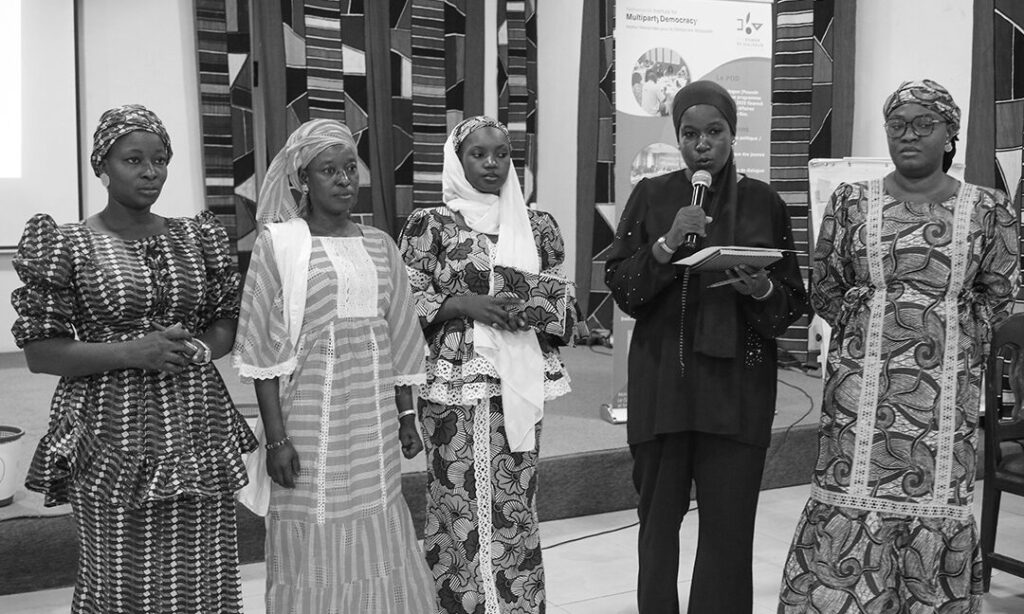
This effort continues through our Popular Assemblies, a series of meetings held since mid-2023 to foster dialogue and prepare Mali for future elections. Even amid uncertainties about the electoral timeline, these sessions collect peoples’ perspectives on the role of political parties in strengthening Mali’s democratic system and how the electoral process can contribute to long-term stability. We are dedicated to conveying these perspectives to national decision-makers, ensuring that the voices of the people are considered in electoral reforms.
Building trust
At the same time, we see our dialogue as a key opportunity to build the trust and respect, which will be vital for long-term stability in Mali. For example, we hold regular informal dialogue events called Cafés Politiques, bringing together political and civil society figures to promote networking and build connections across ideological divides. These gatherings are more than conversations – they create a safe space for collaboration, encourage mutual understanding, and cultivate a culture of inclusive and constructive dialogue.
Integrating research into decision making
As part of our work on dialogue, we also strive to ensure that policy-making is informed by reliable research. We bring together researchers, traditional knowledge holders, structurally excluded groups, policymakers and civic actors in dialogue. Together, they share knowledge which informs governance reforms in Mali, see more information.
Grounding decisions in evidence rather than political agendas enhances credibility and builds trust in politics. What’s more, our dialogues provide direct connections between policymakers, civil society and structurally excluded groups. They serve as a platform to share diverse concerns and perspectives, ultimately making decision-making processes more participatory and responsive.
Democracy education
Ensuring the next generation of Malians have the skills, knowledge and networks to influence politics is crucial for the future of the country.
NIMD hosts Democracy Schools in across Mali, running for three months each. The sessions – both in-person and online – are an opportunity for young emerging politicians and civil society leaders to gain knowledge and enhance their leadership skills to help them shape their democracy.
A network of democracy advocates
Through the interactive training sessions, participants build trust and respect. On leaving, they are equipped with not only knowledge and skills, but also a network of young aspiring leaders.
NIMD hopes this network will expand and thrive in coming years, creating a foundation for greater cross-party cooperation. We host regular informal meetings between alumni to ensure the trust between them continues to grow. We also remain committed to the continued growth and development of our alumni. We provide coaching, mentorship and financial support to selected alumni who wish to implement citizen projects in their communities after training.
A regional scope
Beyond our School in Mali, we provide opportunities for our participants to network with their counterparts in Niger and Burkina Faso. We organize virtual Masterclasses, where the young leaders can exchange ideas and experiences. By fostering these connections, we aim to nurture a sense of shared purpose and broader perspectives that can contribute to collaborative solutions across the region, both now and in the future.
Democratizing the learning
NIMD Mali wants to ensure that as many people as possible have access to the learning we share through our School. The more people who have the knowledge and skills to influence democracy in Mali, the more inclusive that democracy will become. That’s why we have created an online training platform featuring the same curriculum as our in-person schools. This platform is open to everyone and free of charge.
Women in politics
Promoting the participation of women in politics in Mali is at the heart of our work. This starts with understanding the barriers to participation. In 2021, NIMD teamed up with the Westminster Foundation of Democracy and the Malian research group ODYSSEE to produce a report on the Cost of Politics in Mali. The report showed that many women are excluded from entering and participating in politics because they cannot afford it. Its key recommendations underpin much of our advocacy initiatives on this topic.
Alongside this, ensuring women have the power to influence politics is a key aim of our dialogue work, as we strive to harness and amplify the voices of women across Mali. Many of our dialogues with policymakers, researchers and civil society focus on how to make politics more inclusive, for women, young people and other structurally excluded groups.
We also include gender equality on our Democracy School curriculum, as well as ensuring an equal representation of women and men across all our activities. By working with emerging women leaders through our Democracy School, NIMD ensures they can build the leadership skills necessary to navigate the challenges of public life. These efforts help women not only enter the political arena but also become influential voices equipped to shape the future of their country.
Youth in politics
Our Democracy School and many of our dialogue activities focus on supporting young leaders and women, helping them drive positive change towards an inclusive and representative democracy in Mali.
Beyond this, we also work to ensure that young people across the country are informed about their political rights and what it means to transition to a democracy. In 2024, for example, we launched a country-wide campaign – #LaDemocratieSelonMoi. The campaign was aimed at Mali’s youth, encouraging them to think about what Democracy means to them. Our graphic novel L’Élue illustrates the role of democracy, the responsibilities of political leadership and the rights of the population, providing an engaging way to spark conversations among young people.
Meet the team
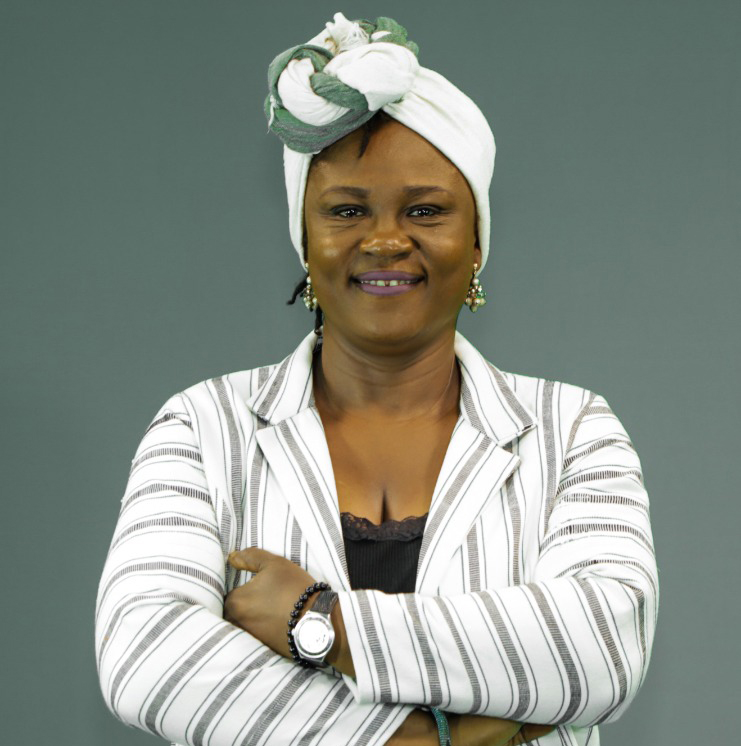 Célia D’Almeida
Country Director, NIMD Mali
Read more
Célia D’Almeida
Country Director, NIMD Mali
Read more
Get in touch directly with NIMD Mali via info-mali@nimd.org
Dédé Faconam d’Almeida, known as Célia, has more than 20 years of experience as a journalist, media expert and specialist in communication for development. During this time, she has built a deep expertise and broad network, collaborating with Malian newspapers and international media on topics including the economy, human rights and sustainable development. She is the founder of media and training consultancy, ODEKA, which leads the “Rue14” information platform dedicated to media training and citizen participation.
Get in touch directly with NIMD Mali via info-mali@nimd.org
Dédé Faconam d’Almeida, known as Célia, has more than 20 years of experience as a journalist, media expert and specialist in communication for development. During this time, she has built a deep expertise and broad network, collaborating with Malian newspapers and international media on topics including the economy, human rights and sustainable development. She is the founder of media and training consultancy, ODEKA, which leads the “Rue14” information platform dedicated to media training and citizen participation.
Who we work with
Our work in Mali is funded by the Dutch Ministry of Foreign Affairs under the Power of Dialogue programme. The Power of Dialogue consortium is made up of NIMD, Gorée Institute, Akina Mama wa Afrika, and Centre des Études Méditerranéennes Internationales, and seeks to enhance collaboration of political and civic actors to participate in accountable political processes.
Our Democracy School and work on integrating research into decision-making are funded by the European Union.
 Facebook
 LinkedIn
 Twitter
 Prev
Prev