NIMD Honduras’s Democracy School Alumni step up for Honduras’s Elections
Published on 09-03-2026
Reading time
5 mins
Democracy Education
Honduras
Stories
Amid a regional landscape marked by fragile democracies, internal tensions, and a citizenry increasingly disconnected from public institutions, Honduras held its presidential elections on 30 November 2025. After an unusually long period of vote counting (24 days), Nasry Asfura, businessman and former mayor of Tegucigalpa, representing the National Party of Honduras, was declared the country’s new president.
But what did this process mean for Honduran society? It generated uncertainty, doubts about the transparency of the counting process, and a perception of illegitimacy, which in turn motivated efforts to strengthen the democratic system through citizen participation—particularly as the country navigated a governmental transition from a left-leaning administration to a traditional, conservative right-wing one.
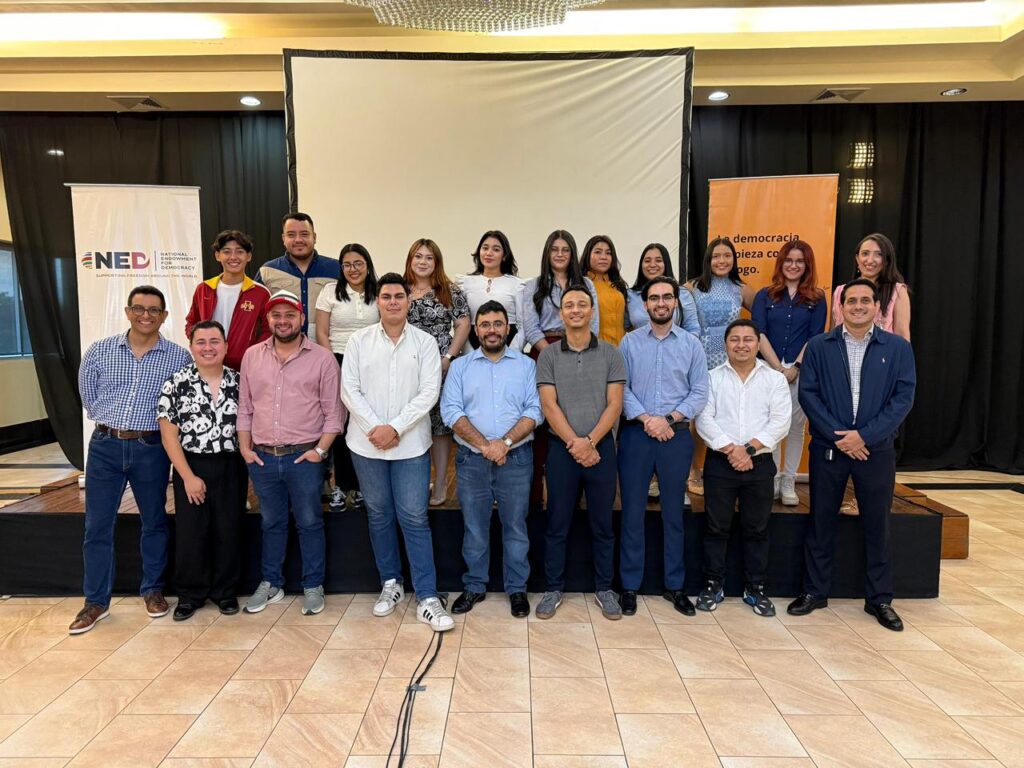
A clear example of this engagement was our NIMD Honduras Alumni, who sought to understand and respond to the country’s political context. Guided by their convictions and deeply-rooted democratic values, they chose to engage not as spectators, but as active contributors to the integrity of the process. Their actions reflected a firm belief in the civic responsibility, reinforcing the idea that democracy is strongest when citizens take ownership of it.
Citizen Observation for Electoral Integrity
“In the face of such a complex context… it is not enough to simply cast a vote: we need an organized presence at polling stations and close monitoring of institutional conduct.” — Cristian Nolasco
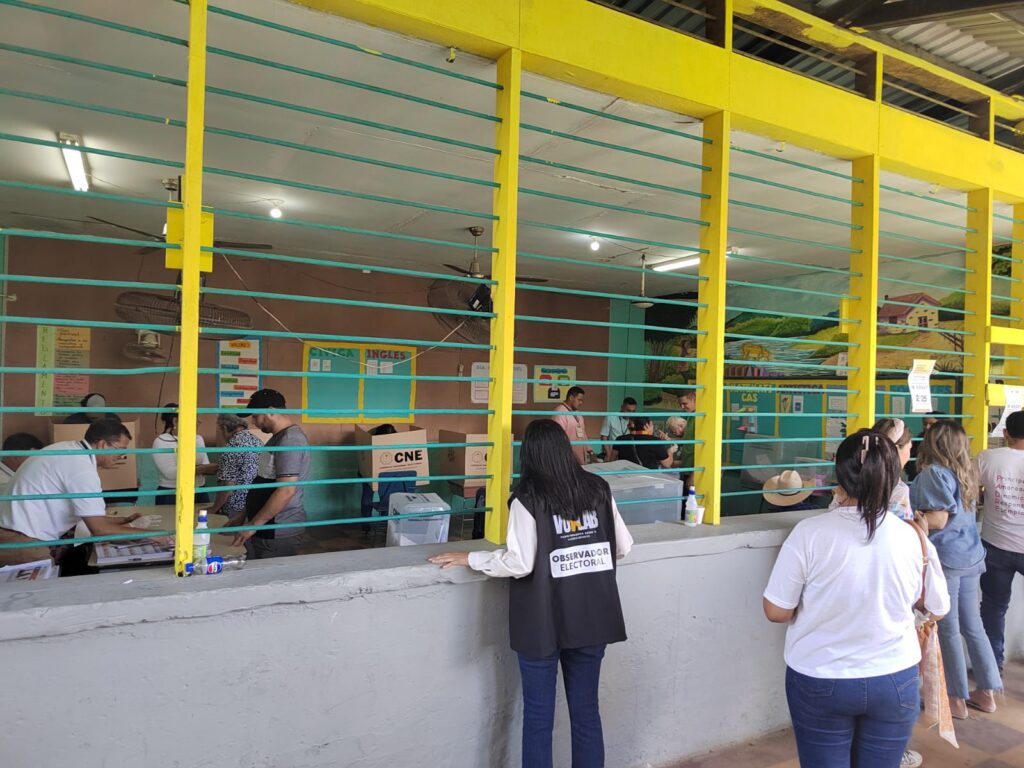
This conviction led Cristian, an Alumnus of NIMD Honduras’s Democracy School and representative of the National Anti-Corruption Council (CNA, by its Spanish acronym), to consolidate within that civil society organization a project titled “I Am More Than a Vote.” The initiative was structured around three key components: citizen representation at polling stations, electoral observation and parallel vote counting to safeguard the right to information.
Citizens played a crucial role in ensuring a transparent electoral process. Coordinated with various political organizations, representatives were nominated at polling stations based not on party affiliation but on their commitment to civic service and integrity. On election day, trained observers closely monitored the proceedings, while also evaluating the performance of authorities and institutions to guarantee impartiality and uphold the legitimacy of the vote.
To reinforce the public’s trust in the results, a parallel vote count was carried out. After collecting all official tally sheets from polling stations, an independent count was conducted and compared with the official numbers, complementing—but not replacing—the authority of the National Electoral Council (CNE, by its Spanish acronym). This approach ensured timely access to clear, verifiable information, highlighting the active role citizens can play in strengthening democracy.
“While civil society’s role is to hold public power accountable, it can also extend a hand and offer constructive solutions. That is what I learned at NIMD.” — Cristian Nolasco
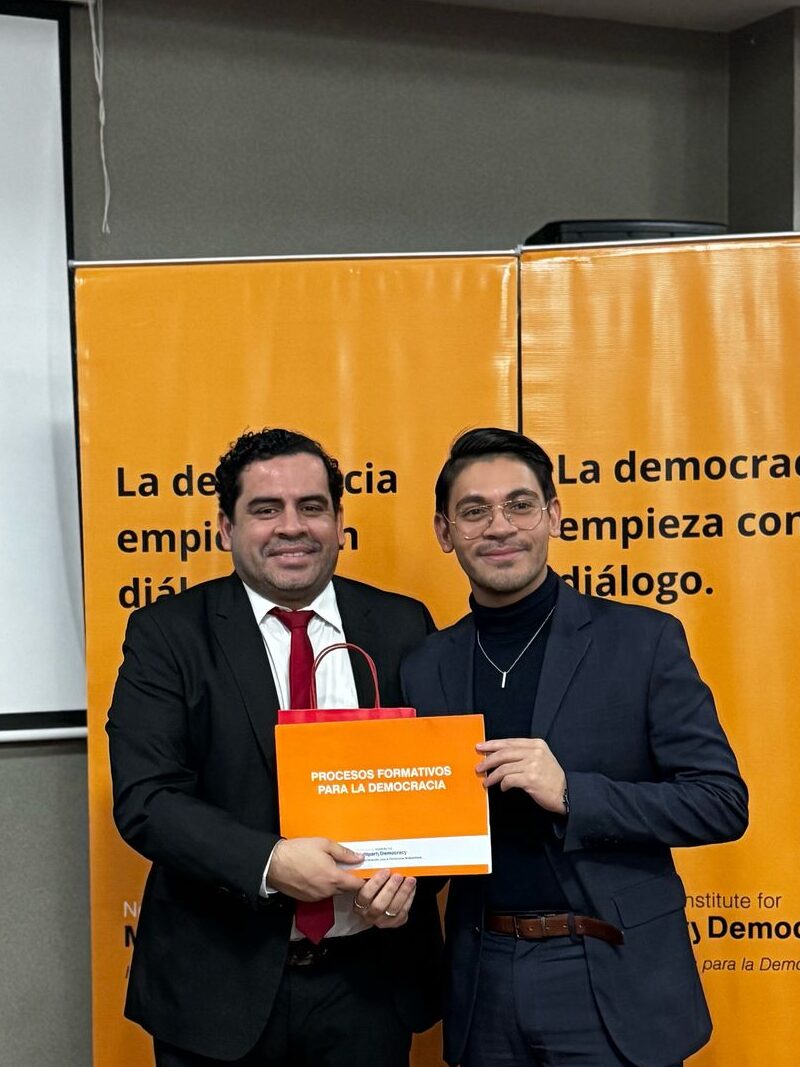
Cristian with Juan Melendez, Country Director for NIMD El Salvador during the NIMD Democracy School Graduation Ceremony.
More Alumni Committed to Democracy
The commitment to drive change, rooted in professional experience and personal initiatives, has spread throughout Honduras’ Alumni network, where what began as shared ideas and motivations have now evolved into concrete plans with measurable progress and promising future plans.
This is the case of Ana Orellana and Marco Bhaday. Both met at the Democracy Schools, where they agreed to join forces: Ana, as co-founder of Vox Lab, and Marco, as representative of the National Confederation of Federations and Patronages of Honduras (CONAFEPH, by its Spanish acronym), sought not only to observe but also to influence improvements in the electoral process. They developed an easily accessible digital form through which field observers could record irregularities and submit them to the authorities for corrective action.
“Vox Lab was accredited with the CNE during the last elections under the auspices of CONAFEPH (with Marco as our liaison), thanks to an electoral observation initiative they developed called VEO (Organized Electoral Oversight, by its Spanish acronym), an initiative that engaged more than one thousand Hondurans as electoral observers. We represented the youth component of their electoral observation mission, and as a lab, we supported them in monitoring the entire process in terms of data collection before, during, and after the election. We also contributed to preparing the findings and recommendations reports presented to the CNE.” — Ana Orellana
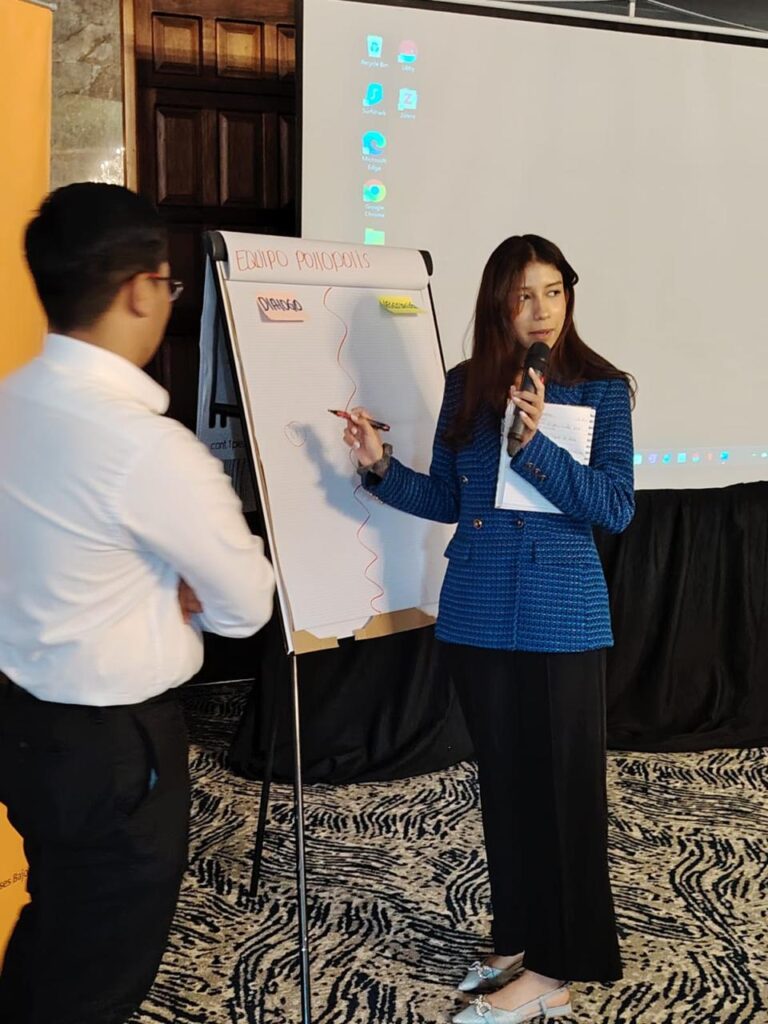
Grethel Moya during the NIMD Democracy School.
Additionally, Grethel Moya, a fellow alumna and student of International Relations, joined the electoral observation efforts and, as a member of the Global Network of Young Politicians, helped mobilize more people to participate in oversight activities. She assisted in collecting data from selected polling stations to produce a report identifying deficiencies and recommendations and contributed her analysis on the importance of youth engagement in elections.
“NIMD not only helped us improve our skills as dialogue facilitators but also connected us with many other civil society organizations, enabling us to form alliances and motivate young people to vote, to engage in observation… because we are the present, not the future. This is the moment when we can make change happen.” — Grethel Moya
Shared Challenges, Collective Responses
Distrust in institutions, limited access to information, and a lack of guarantees for citizen participation were among the key challenges identified during this electoral process. In response, hands-on training, coordination, and political advocacy are essential for mobilizing high-impact initiatives that address local challenges. Many of the actions carried out by NIMD Honduras’s alumni in electoral observation today pursue a broader transformative purpose.
Currently, Ana and Marco focus on developing proposals, recommendations, and public policy guidelines grounded in evidence, citizen analysis, and the engagement of youth in reflecting on democratic reforms and potential regulatory initiatives.
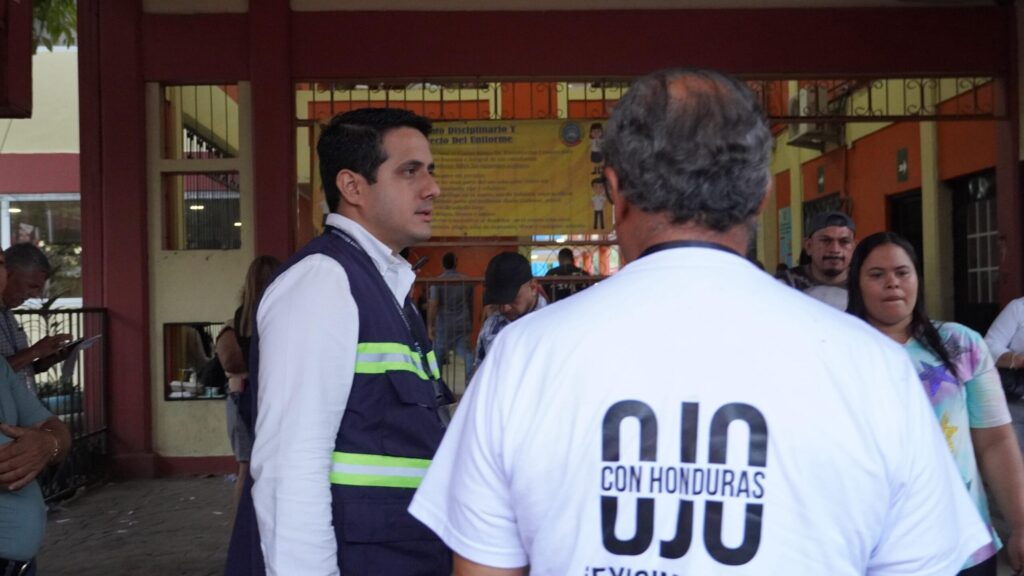
Marco in his role with VEO 2
“With Vox Lab, we have set out to design legislative initiatives that could strengthen the country’s electoral framework. Our goal is to share these proposals with different sectors to build broad, consensus-based solutions that improve both the law and the electoral process.” – Marco Bhaday
Meanwhile, Cristian remains committed to expanding his citizen oversight project, integrating pedagogical and relevant narratives to engage civil society not only in elections but also in political education and advocacy. Similarly, Grethel continues to build alliances to bring youth closer to participatory processes nationwide, working alongside Ana to promote innovative methodologies for policy diagnostics and pilot projects.
NIMD Honduras: A Living Network
The work of NIMD Honduras has not remained confined to meeting rooms or workshops; it has had a far-reaching impact on those who have taken part. Not only through individual learning, but also by creating meaningful opportunities to move forward collectively. These exchanges have become spaces of mutual recognition — of the experiences, ideas, and diverse perspectives that each person brings.
To provide the best experiences, we use technologies like cookies to store and/or access device information. Consenting to these technologies will allow us to process data such as browsing behaviour or unique IDs on this site. Not consenting or withdrawing consent, may adversely affect certain features and functions.
Functional
Always active
The technical storage or access is strictly necessary for the legitimate purpose of enabling the use of a specific service explicitly requested by the subscriber or user, or for the sole purpose of carrying out the transmission of a communication over an electronic communications network.
Preferences
The technical storage or access is necessary for the legitimate purpose of storing preferences that are not requested by the subscriber or user.
Statistics
The technical storage or access that is used exclusively for statistical purposes.The technical storage or access that is used exclusively for anonymous statistical purposes. Without a subpoena, voluntary compliance on the part of your Internet Service Provider, or additional records from a third party, information stored or retrieved for this purpose alone cannot usually be used to identify you.
Marketing
The technical storage or access is required to create user profiles to send advertising, or to track the user on a website or across several websites for similar marketing purposes.



 09-03-2026
 5 mins