


Mozambique
Country
- NIMD in Mozambique: At a glance
- What we do
- How we do it
- Meet the team
Main objective
To build trust, reduce electoral violence and strengthen democratic processes in Mozambique – while amplifying the voices of marginalized groups, particularly women and youth – in politics and decision-making.
Results
Through support and training, NIMD and our partner IMD equipped the women’s leagues with tools and strategies to successfully lobby for more women to be put forward as lead candidates in the 2023 municipal elections. This led to 24 women being nominated – an increase from 2018. Of these, six were elected.
Jointly implemented by IMD and its partners, Mozambique’s Peace Room works to safeguard the integrity and legitimacy of the electoral process. After the 2024 general elections, it trained political parties on electoral litigation, equipping them to address electoral irregularities through non-violent means. This has helped the parties establish a new set of transparent legal processes – a first step towards rebuilding trust in democracy and reducing the risk of future electoral violence.
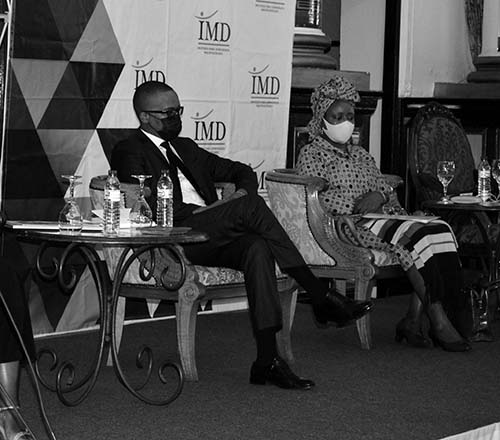
NIMD and IMD regularly bring politicians from across party lines in dialogue. Together, they created and lobbied for a national women’s political agenda to promote the meaningful participation of women in politics. With support from across the political spectrum, and signed by various civic leaders, this agenda is a significant step towards amplifying women’s voices in politics and promoting cross-party collaboration to advance gender-inclusive policies.
Mozambique: Political background
Since emerging from a 16-year civil war in 1992, Mozambique has shown commitment to peace and democracy. The country established a multiparty political system, holds regular elections and signed a landmark peace agreement in 2019. But, like many countries with a history of conflict, Mozambique continues to grapple with political instability and tensions between political parties.
At the heart of many of these challenges lie the issues of inclusive politics and political freedoms. Barriers to political participation remain entrenched for many structurally excluded groups, including women and youth. These include limited freedom of expression within political parties and restrictions to women’s and youth leagues.
Coupled with this, the effective exercise of constitutional rights, such as free expression and the right to peaceful demonstration, remains a major challenge. Protests are frequently met with repressive responses, including the use of excessive force. Following Mozambique’s most recent general elections in October 2024, this reality became painfully clear. Amid electoral misconduct, contestation and allegations of fraud, over 100 people died in post-election protests.
Mozambique now stands at an important moment. In the months and years ahead, the country will need to work to rebuild trust in politics and strengthen its democratic foundations. By prioritizing inclusive politics, improving the transparency and robustness of electoral systems, and rebuilding trust between citizens and institutions, Mozambique can take significant steps towards a democracy where all voices – particularly those historically excluded – are heard. This will be essential for ensuring lasting peace, stability and a political system that works for everyone.
What we do
NIMD has been working in Mozambique since 2000. Our projects are implemented by our partner organization the Institute for Multiparty Democracy Mozambique (IMD), who is committed to supporting the implementation of the Peace Agreement and promoting the meaningful participation of women and young people in political processes.
We focus on building an inclusive political system and culture through interparty dialogue, training, and collaboration between politicians and civil society. This includes supporting transparent and peaceful elections, strengthening trust between political actors and amplifying the voices of marginalized groups.
We believe that more inclusive, transparent and representative politics is essential for a stable and democratic future – one where citizens feel heard, trust their institutions, and actively engage in shaping their country’s future.
What we do: In numbers
How we do it
Dialogue
At the heart of our approach in Mozambique is dialogue. NIMD and IMD work with different groups to promote a respectful and inclusive discussion on topics crucial for the future of Mozambique’s democracy.
First, we work to promote interparty collaboration, greater transparency and a more trusting environment surrounding elections. In 2014, IMD launched the Peace Room initiative, an innovative approach aimed at resolving electoral disputes by gathering key actors from across the political spectrum in a room at key points during the election cycle. They would then discuss a unified approach to any potential election anomalies in real time, increasing public faith in the integrity of the process. The model was replicated in the 2019 and 2024 general elections.
Historically there has also been a gap between civil society and government in Mozambique, with interactions often hostile and unproductive. We work to bring these different actors around the table to ensure that knowledge and experience can be shared in a respectful atmosphere. Past IMD dialogues have centred most notably on creating consensus around the extractive industries, while more recent dialogues have focused on inclusive politics, including creating joint strategies on breaking down barriers to the political participation of women and youth. When such initiative are built on consensus across divides, they carry greater legitimacy and have a stronger chance of driving lasting change.
Responsive politics
As part of our commitment to supporting safe, transparent and inclusive politics, NIMD and IMD run training courses for politicians. Our objective is to support politicians and their institutions to respond to the needs of Mozambique’s people, and build trust among the general population.
One of our biggest tasks in coming months will be to provide support to new MPs in parliament. Following the 2024 elections, over 50% of newly elected MPs are fresh faces. We will organize induction sessions to help them navigate their roles and responsibilities. This support will be crucial due to the high expectations and pressure to perform as citizens wait anxiously.
Alongside this, we provide critical support and training for political party representatives on topics such as inclusiveness, leadership and policy development, to support the parties as they improve their skills, decision-making process and internal democracy. For example, our 2023 training for political parties on developing written manifestos, led a number of parties to include a gender-sensitive and youth-sensitive perspective in developing their manifestos for the 2024 elections.
Lastly, our Peace Room plays a crucial role in strengthening the transparency of electoral processes in Mozambique. The Peace Room produces policy briefs and studies including recommendations for electoral reform. In addition, by effectively monitoring and sharing real-time information about the electoral cycle – such as voter registration, campaign, voting day and results tabulation, the Peace room is working to ensure the integrity and legitimacy of electoral processes. By maintaining vigilance and dedication to democratic principles, Mozambique can work towards a future where elections are fair, transparent, and free from violence.
Women in politics
Women in Mozambique have traditionally been excluded from leading roles politics, but IMD is striving to ensure that the voices of women and youth are amplified as the country works towards transparent and inclusive politics.
Initiatives include IMD’s Academy for Women in Politics, and a programme focused on Women, Peace and Security that actively promotes the role of women by providing skills-sharing and networking opportunities. We also work with the women’s leagues of political parties and civil society, with the aim of supporting them in their work towards inclusive democracy. Through both platforms, we focus on supporting the participants as they build skills and knowledge to navigate political barriers and assert their influence on their democracy.
A 2023 exchange visit of women leaders from the Women’s Political Academy to South African, for example, helped to expand participants’ networks, as well as building skills in lobbying and dialogue.
Meet the team
 Hermenegildo Mulhovo
Executive Director NIMD Mozambique
Read more
Hermenegildo Mulhovo
Executive Director NIMD Mozambique
Read more
Hermenegildo Mulhovo has over 25 years of experience on the field of community development and multiparty democracy assistance, and his areas of expertise are political processes, peacebuilding, democratic governance of natural resources, and strategic planning. He received specialized training at the Center For Justice and Peace Building at the Eastern Mennonite University (USA) and Strategic Peacebuilding Processes through Dialogue and Mediation at Folke Bernadotte Academy in Sweden.
Hermenegildo Mulhovo has over 25 years of experience on the field of community development and multiparty democracy assistance, and his areas of expertise are political processes, peacebuilding, democratic governance of natural resources, and strategic planning. He received specialized training at the Center For Justice and Peace Building at the Eastern Mennonite University (USA) and Strategic Peacebuilding Processes through Dialogue and Mediation at Folke Bernadotte Academy in Sweden.
Who we work with
We implement our projects in Mozambique together with the Institute for Multiparty Democracy Mozambique (IMD), an independent, impartial organization committed to supporting democracy in Mozambique.
Our work in Mozambique is funded by the Dutch Ministry of Foreign Affairs under the Power of Dialogue programme. The Power of Dialogue consortium is made up of NIMD, Gorée Institute, Akina Mama wa Afrika, and Centre des Études Méditerranéennes Internationales, and seeks to enhance collaboration of political and civic actors to participate in accountable political processes. We also receive funding from the Ministry of Foreign Affairs in Finland, via Demo Finland.
 Facebook
 X
X Prev
Prev