Netherlands Institute for Multiparty Democracy

Nederlands English

Ghana

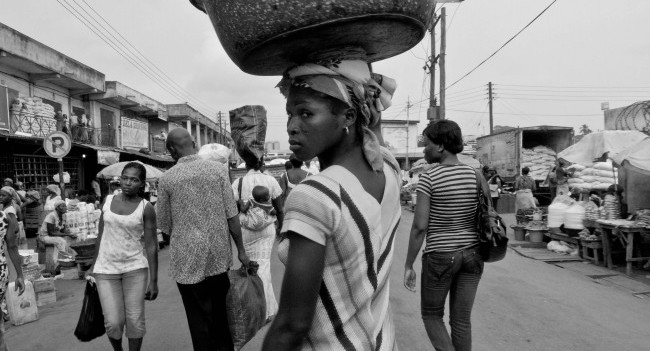
Ghana: polling station

In Ghana, NIMD supports a programme that has delivered a home grown democratic reform agenda.

images

Bringing out your vote in Ghana Ghana: youth rally Ghana: tax office Ghana: voter education Ghana: voter registration Ghana: polling station

What we do: Ghana

What we do: Ghana

Video - 2009
Partners explain how NIMD's assistance to interparty dialogue has contributed to a peaceful transition of power after the elections in December 2008, and helped deepen democracy in Ghana.

Programme news

President Ghana lauds opposition for promoting democracy

President Ghana lauds opposition for promoting democracy

News Article - 04 March 2010
At a meeting with party leaders, Ghana's President John Evans Atta Mills has given credit to the opposition for making democracy flourish in Ghana.
Comparing Youth Participation in Ghana and Kenya

Comparing Youth Participation in Ghana and Kenya

News Article - 27 January 2010
Last year Gideon Chitanga conducted research for Young NIMD on the political participation of young people in Ghana and Kenya.
Accountability in Africa

Accountability in Africa

Video - 2010
Politicians from Ghana, Malawi and Kenya discuss ways of improving accountability in African politics.
The Obama effect

The Obama effect

Video - 2010
Discussion with African politicians on the impact of Barrack Obama's election and presidency in Africa.
Leadership in Africa

Leadership in Africa

Video - 2010
Discussion with politicians from Ghana, Kenya and Malawi on political leadership in Africa.
What we do: Ghana

What we do: Ghana

Video - 2009
Partners explain how NIMD's assistance to interparty dialogue has contributed to a peaceful transition of power after the elections in December 2008, and helped deepen democracy in Ghana.
Ghana: ‘Poor but bold’, women advance political participation

Ghana: ‘Poor but bold’, women advance political participation

Case Study - 2009
Democratic development does not comply to a singular template that can be readily exported. It is an incremental process that needs to grow from within. In this context NIMD has learned that exchanges with peers from other countries are valuable. They contribute to comparison of political practices,
Ghanas DCSP: A home-grown democratic agenda

Ghana's DCSP: A home-grown democratic agenda

Case Study - 2009
NIMD’s approach to democracy support is exemplified by the Democratic Consolidation Strategy Paper (DCSP) of the political parties in Ghana.
Multiparty Success in Ghana Elections

Multiparty Success in Ghana Elections

Video - 2009
A look at the role of multiparty cooperation in Ghana's recent general election
Ghana: New Presidents special committment to Political Parties Programme

Ghana: New President's special committment to Political Parties Programme

News Article - 26 February 2009
Newly elected Ghanian President Professor John Mills promises legislative commitment to IEA's political parties programme in his first ever State of the Nation Address.
1 - 2 - 3 - next ›

Programme information

Factsheet Ghana

Factsheet Ghana

Factsheet Ghana offers concise NIMD programme information and a prêt-à-porter political analysis on a single sheet.
 

With Ghana partner, the Institute for Economic Affairs (IEA), NIMD supports a political party programme, which has delivered a home grown democratic reform agenda (DCSP), and  contributed to free and fair elections in December 2008 and a smooth transition of power.

Political parties in parliament

• Convention Peoples Party (CPP)
• New Patriotic Party (NPP)
• National Democratic Congress (NDC)
• Peoples National Convention (PNC)

Key political events

• Enactment of the Representation of the People (Amendment) Act (ROPAA), which enfranchises Ghanaians in the diaspora.
• Party primaries for the election of presidential candidates.
• Free and fair General Elections held in December 2008, won by the NDC and its Presidential Candidate John Atta Mills

Key achievements

• Consensus reached on national political reform agenda.
• DCSP finalised and adopted by the government as a national strategy for democratic consolidation.
• Electoral Code of Conduct enhanced with Enforcement Body
• A series of televised debates with presidential candidates taking questions from the public helped enhance the legitimacy of the electoral process.

Lessons learned

• Attracting external funding for the Ghana programme proved difficult. Although IEA managed to attract a substantial amount of external funding in 2008, these funds where dedicated to election-related activities. No concrete commitments have been secured towards implementing the DCSP despite positive responses from a various donors. In 2009, NIMD and IEA will embark on a joint lobby strategy to seek additional funding for the roll out of the DCSP and to ensure that IEA’s funding base is sufficiently diversified.

Key national partners

• Institute of Economic Affairs (IEA)
• Electoral Commission
• Law Reform Commission
• National Commission for Civic Education
• National Peace Council
• Finance, Constitutional and Legal Committee

International partners

• Royal Netherlands Embassy
• Ghana Research and Advocacy Programme (G-RAP, an initiative of Canada, Denmark, The Netherlands and United Kingdom)
• European Commission